
CLASSROOM RESOURCES
Lithuanian History Timeline
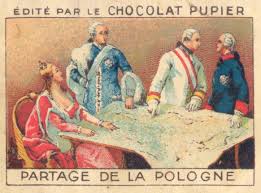
Austria, Russia, and Prussia, seeking to further diminish the power of the Polish-Lithuanian Commonwealth in the region, coordinated an invasion and seized territory. 30% of the Commonwealth’s lands were lost.
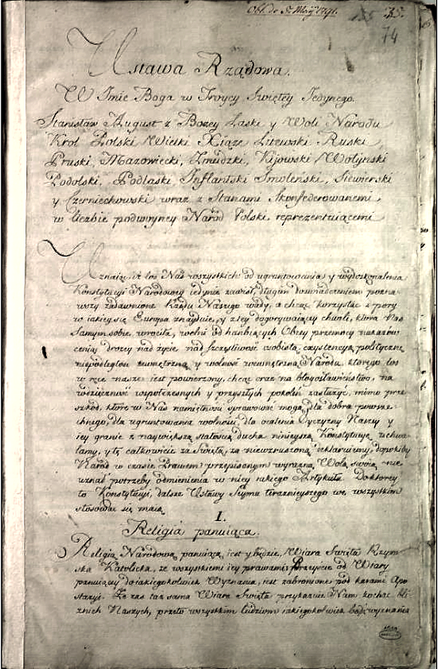
The May 3 constitution was Europes’s 1st modern codified national constitution, following the 1788 ratification of the U.S. Constitution. Introducing political equality between townspeople and nobility, placing peasants under the protection of the government. Only in effect for a year, until the Russian-Polish war of 1792.
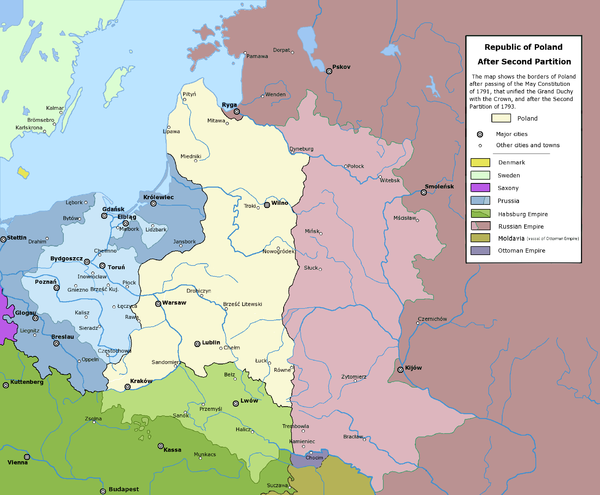
Russian Empress Catherine II felt threatened by the Polish-Lithuanian Commonwealth’s democratic 1791 constitution and its attempts at modern reform, which could lead to a resurgence in the Commonwealth’s strength. Russian forces invaded in 1972. Russia and Prussia divided up the territory, seizing 60% of Polish-Lithuanian lands.
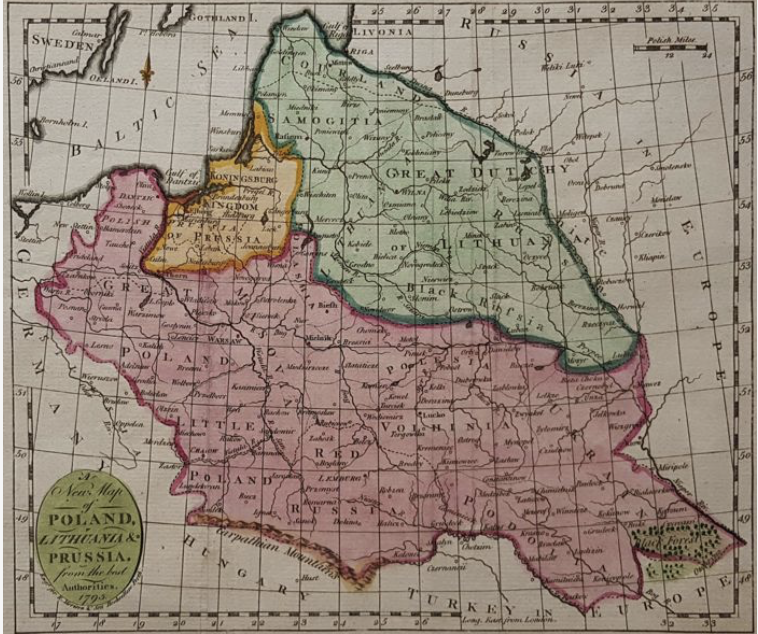
What remained of Lithuania and Poland after the Second Partition.
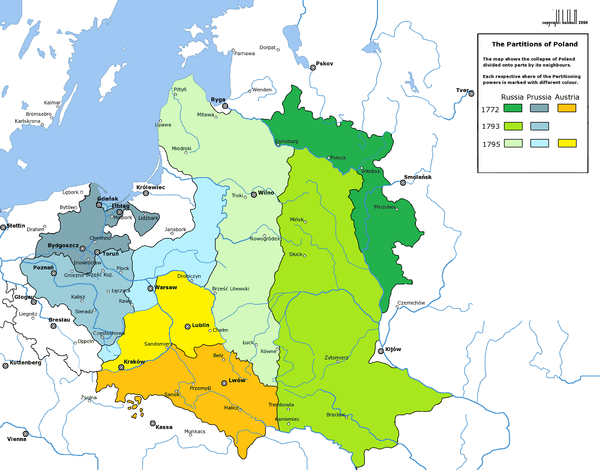
After a failed Polish rebellion against the Austrian, Russian, and Prussian occupiers, they acted to wipe Poland off the map, dissolving the Commonwealth. The remainder was divided up between them. Lithuanian territory fell under Tsarist Russian rule, except for Klaipėda (Memel), which went to Prussia.
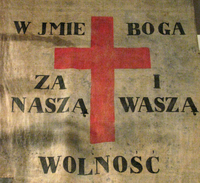
The uprising against the Tsar began in Warsaw and spread through Lithuania with over 150,000 citizens participating. The larger and more powerful Russian army succeeded in crushing the rebellion. Over 40,000 rebels were killed/injured.
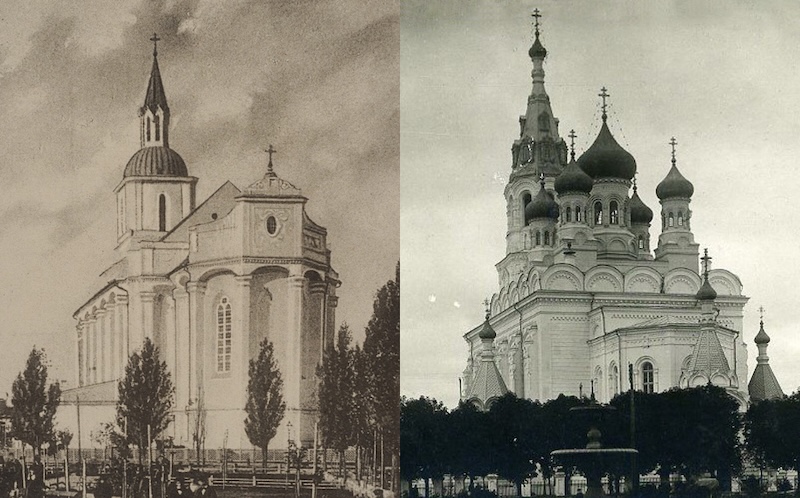
The Tsar implemented further reprisals against Poles and Lithuanians to punish them for the uprising. The Tsar removed their nobility status and confiscated private lands. The Russian language replaced Polish, Lithuanian, Ukrainian, and Belarusian in official administrative capacities. Vilnius University was closed.
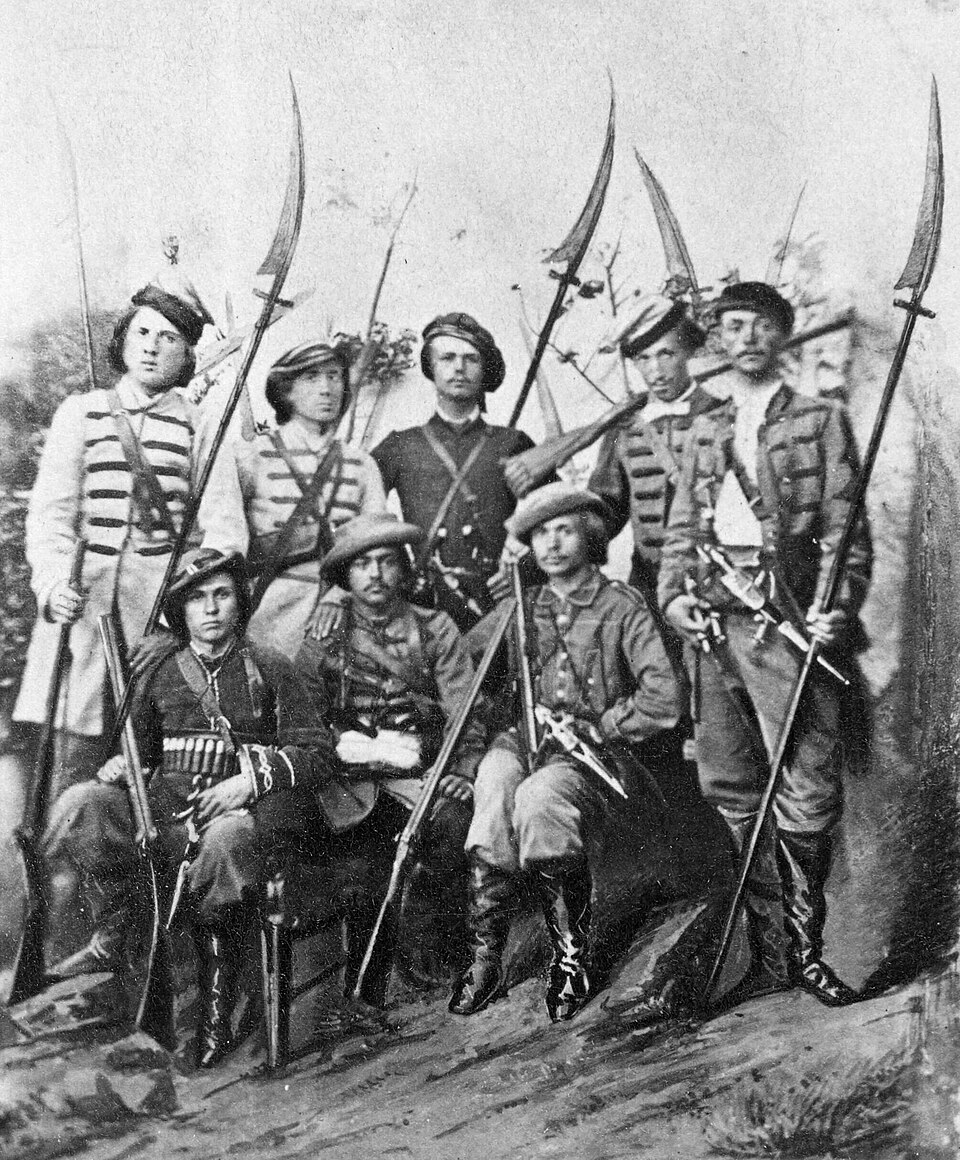
The uprising began when young Poles refused conscription into the Tsar’s army, and the defiance spread to over 200,00 Poles and Lithuanians rising up against the Russian occupation. The Tsar’s forces crushed the rebellion and publicly hanged rebels and sent over 80,000 people to Siberian Gulags.
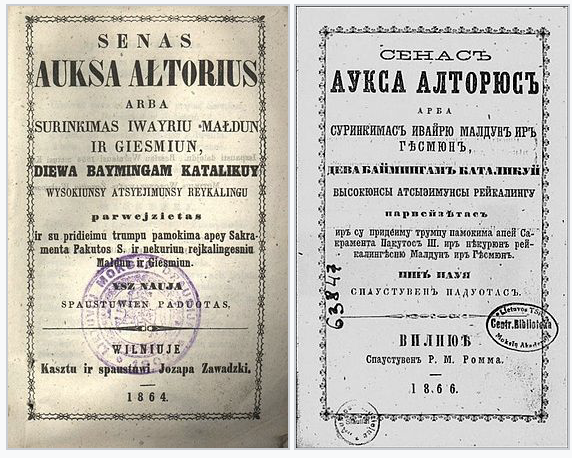
After the failed uprising, the Tsar banned the Polish and Lithuanian languages. Catholic schools and monasteries were closed. Lithuanians and Poles were banned from pursuing public service work (government roles) or professional careers (teachers, lawyers, doctors, etc). More land was confiscated and repopulated by ethnic Russians.
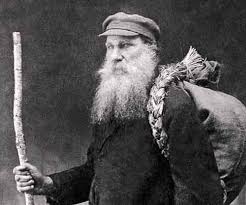
After the 1863 insurrection against the Russian occupation, Tsar Alexander II banned the Lithuanian language and Lithuanian schools. The Russian language was enforced upon the country. But about 30,000-40,000 books, published as far away as the United States, were smuggled into Lithuania each year by individuals (“Kyngnešai).
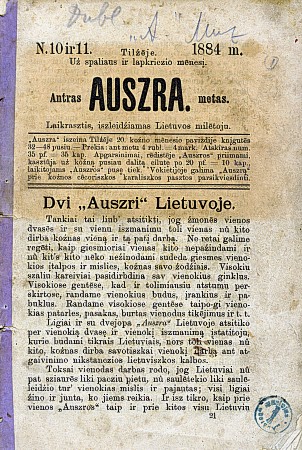
Tsarist repressions inspired a period of “National Awakening.” Studies of the banned Lithuanian language and culture proliferated in underground movements and outside of Lithuania. Lithuania’s first national and political newspaper, Aušra, was published in Prussia because of the Tsar’s press ban, but it gained popularity and attracted contributors from the Lithuanian intelligentsia.
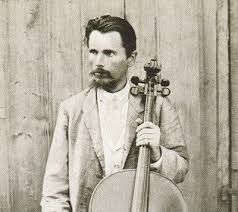
Vincas Kudirka (1858-1899), a physician and poet, was active in Lithuanian “National Awakening” movement. Kudirka edited the underground newspaper, “Varpas” (The Bell) which promoted Lithuanian cultural consciousness and called for independence.He composed the music and lyriscs of a song, which in 1918, would become Lithuanian’s national anthem.
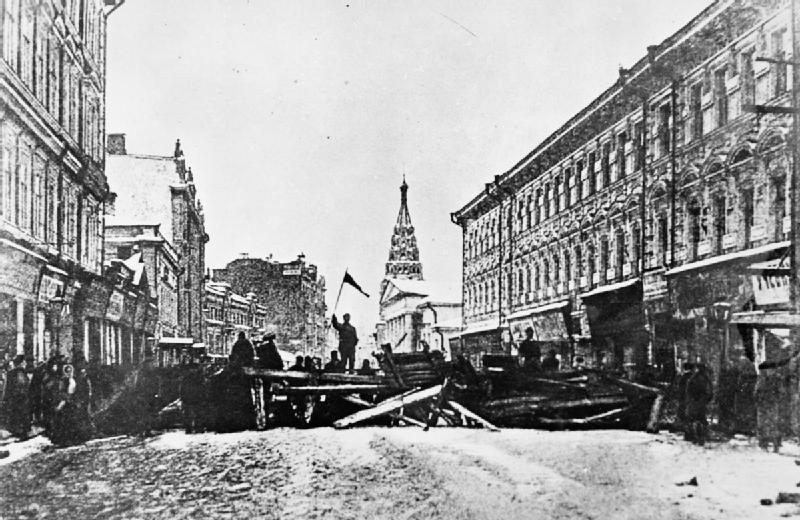
After a series of mass worker strikes and violence (revolutionaries killed over 17,000 civilians), Tsar Nicholas II was forced to create a new legislative body and accept a new Russian Constitution, transforming his rule into a Constitutional Monarchy, thereby limiting his powers.
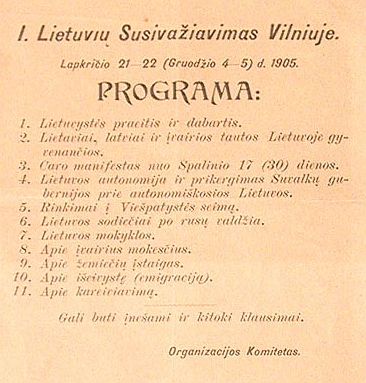
The 1905 Russian Revolution forced Tsar Nicholas to make concessions to the occupied countries. In Vilnius, a National Assemby formed and adopted a resolution demanding Lithuanian autonomy, equal rights, political and religious freedom, the reinstatement of the Lithuanian language and schools. The Tsar granted some of these demands, but fell short of granting autonomy.
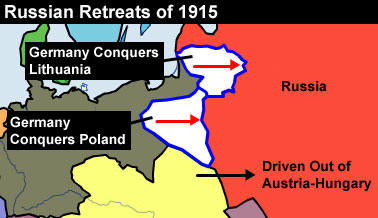
The German Kaiser’s forces invaded Russia, quickly occupying Lithuanian, Latvian, and Estonian territory.
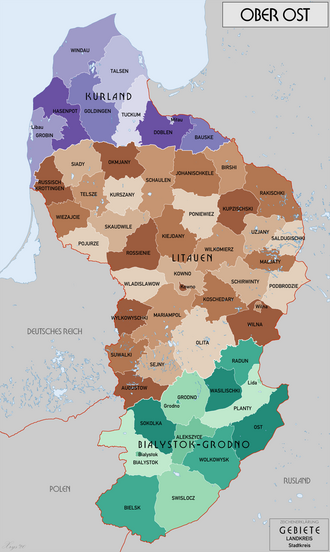
As Germany incorporated the Baltic nations into its Ober Ost region, Lithuanian activists held 10 conferences in Switzerland and Sweden during World War I to discuss Lithuania’s political future and negotiate independence with world leaders after the war.
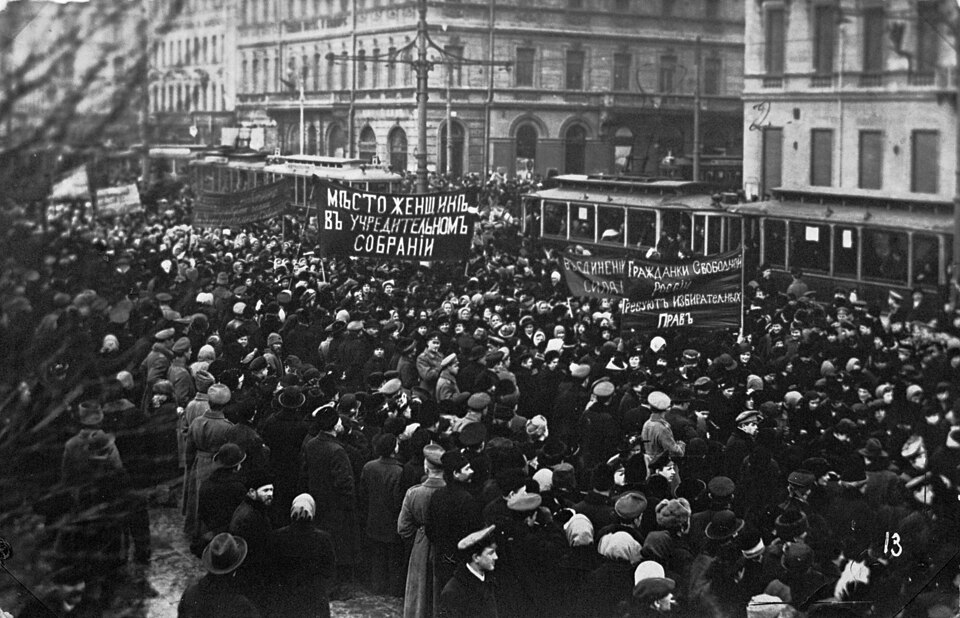
While civil society had broken down due to the war and shortages, protests erupted in Petrograd, demanding an end to the monarchy. Russian militants took advantage and stormed the monarch’s government. Tsar Nicholas II abdicated. A provisional governemnt was formed.
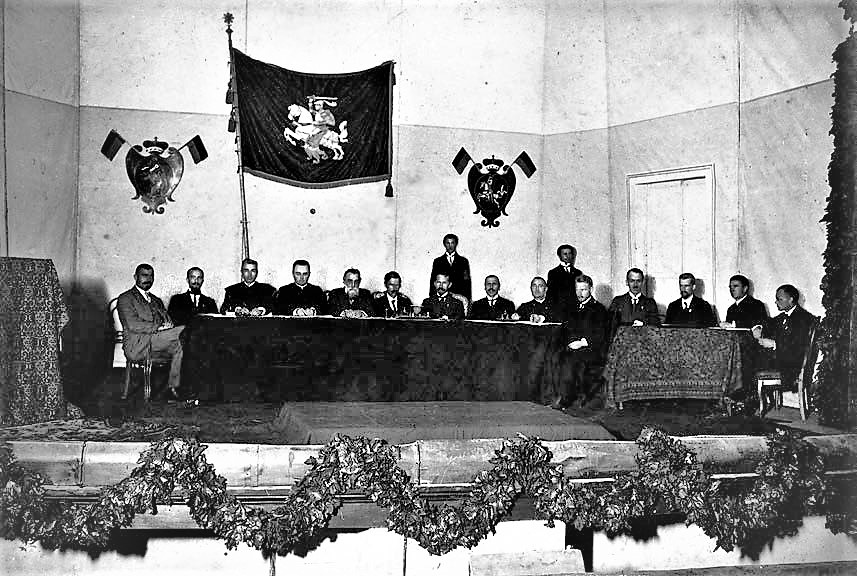
Lithuanians and members of various ethnic communities in Lithuania held a conference and declared that an independent Lithuanian state based on democratic principles must be established. The conference elected the “Council of Lithuania,” which moved forward with establishing Lithuanian independence.
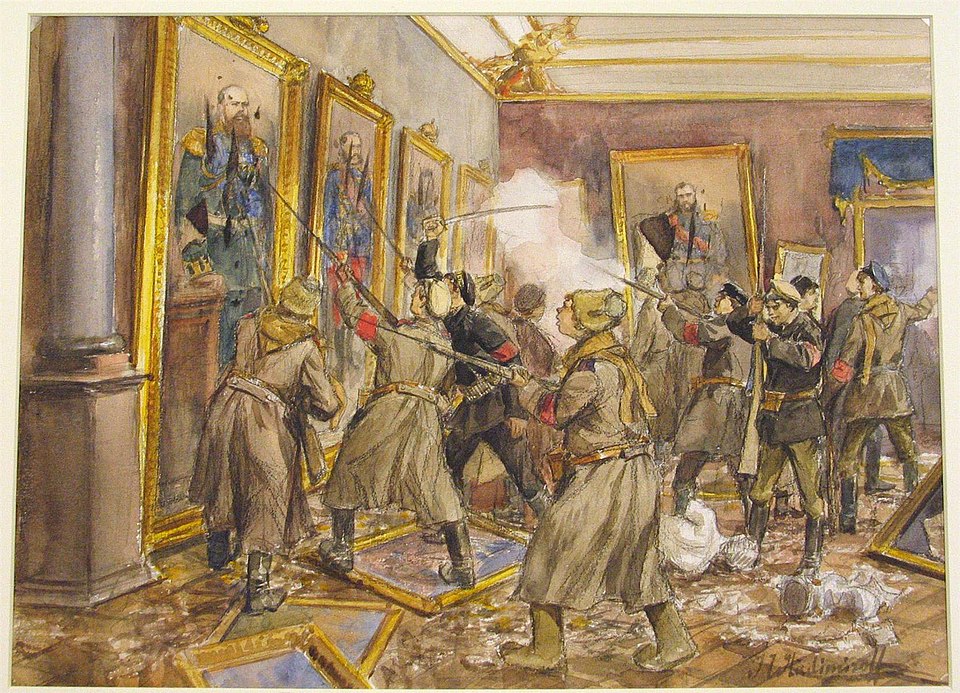
Bolshevik militants (the “Reds”), led by Leon Trotsky (and Vladimir Lenin), stormed the Winter Palace in Petrograd and removed the provisional government, taking power.
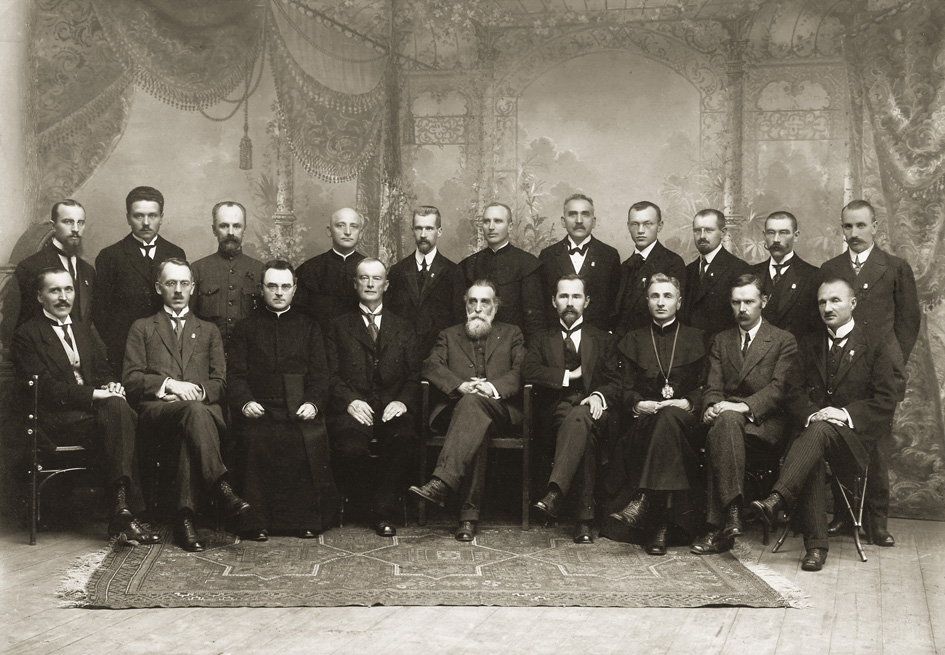
The Council of Lithuania adopted the Act of Independence of Lithuania, which restored Lithuania as a democratic republic.
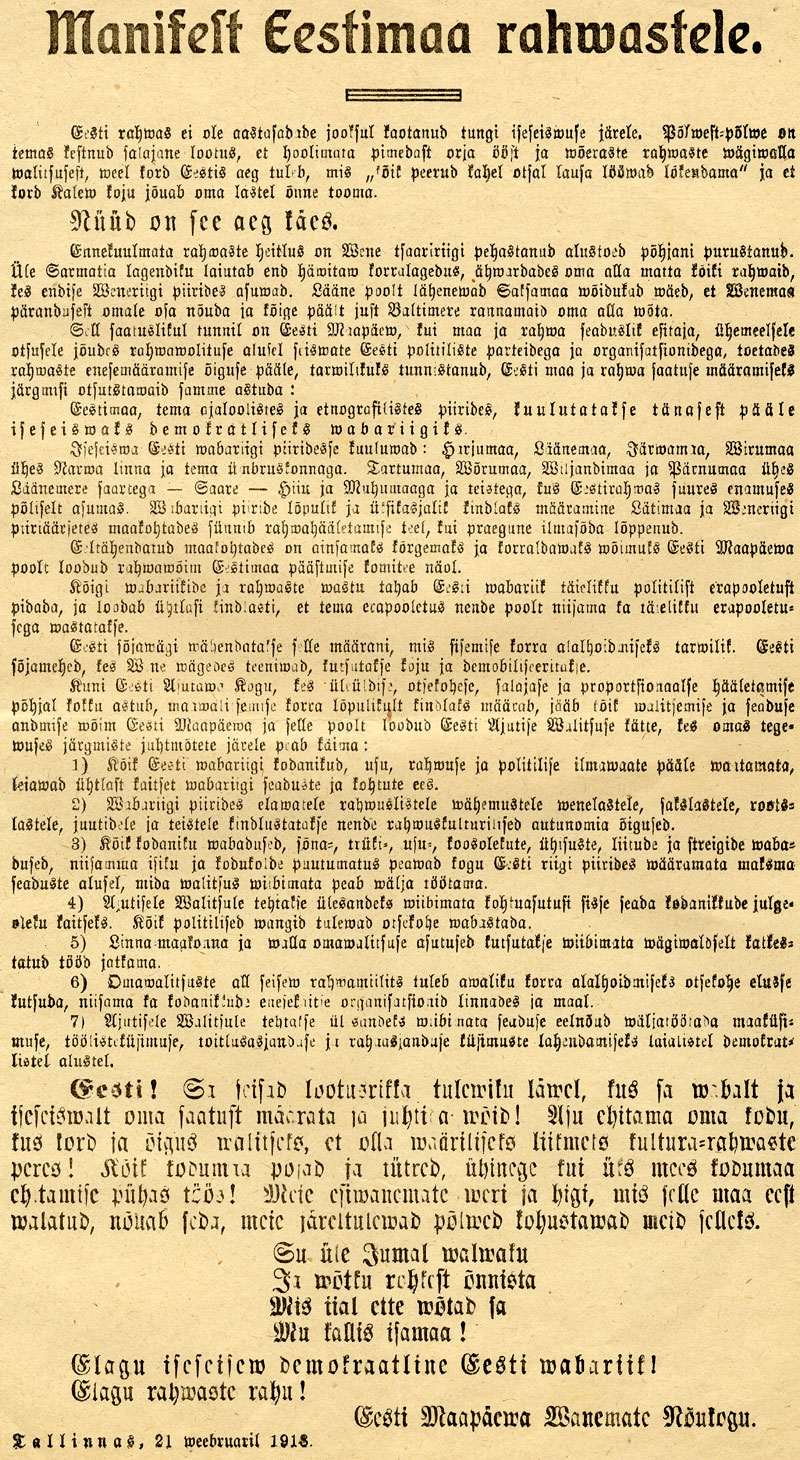
The founding act that established the independent democratic Republic of Estonia.
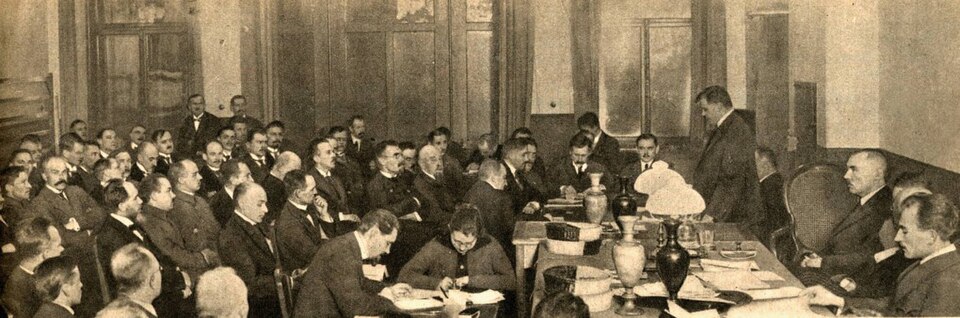
The founding act that established the independent democratic Republic of Latvia.
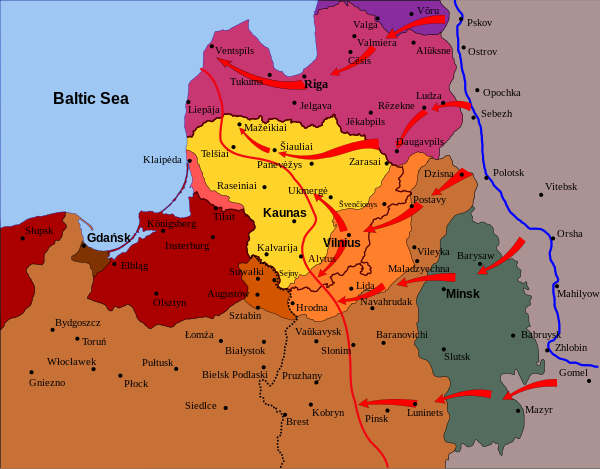
The Red Army and Bolshevik forces marched into Lithuania and seized territory. Having only become an independent state, Lithuania did not have a standing army, so volunteer partisans were quickly organized to fight the invasion. Lithuanian forces mounted offenses and defeated the Red Army and Bolsheviks.
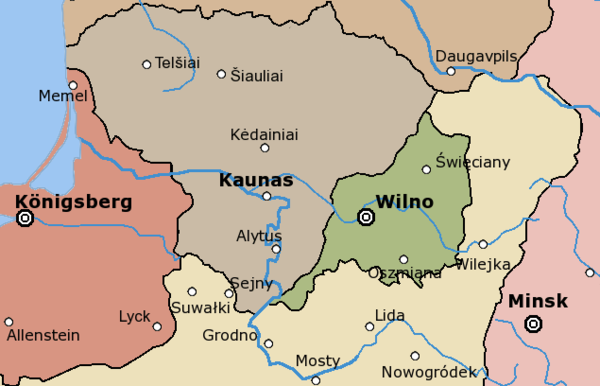
In April 1919, Polish forces invaded and captured Vilnius and the region. Defeated, Lithuania was forced to move its capital to Kaunas.
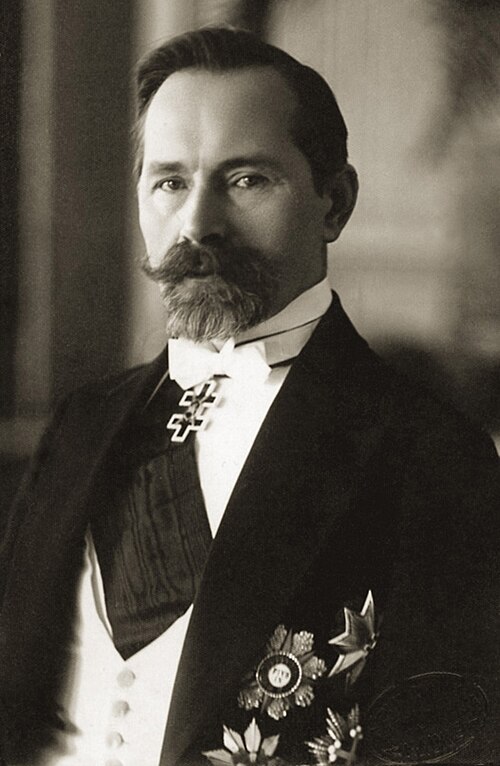
The State Council of Lithuania elected the first President of the Republic of Lithuania, Antanas Smetona (1874-1944), who served until April 19, 1920.
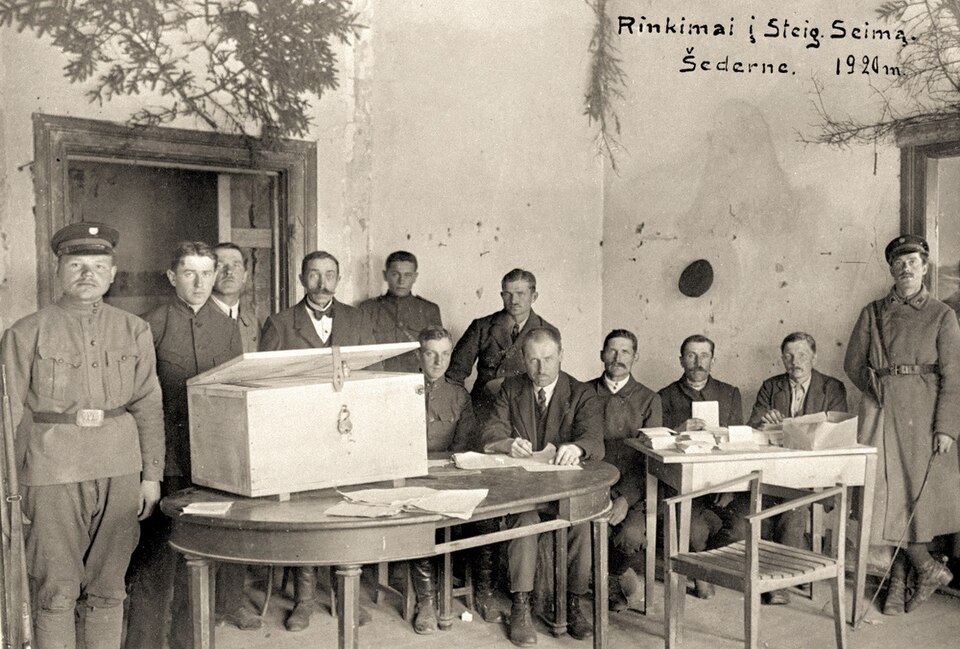
Voter turnout was 90%. Women had the right to vote in Lithuania and were candidates as well. 112 representatives were elected, including 8 women. The Lithuanian Christian Democratic Party won 59 seats, and the bloc of the Socialist Democratic Party and the Peasant’s Union won 28 seats, and ethnic parties won 13 seats.
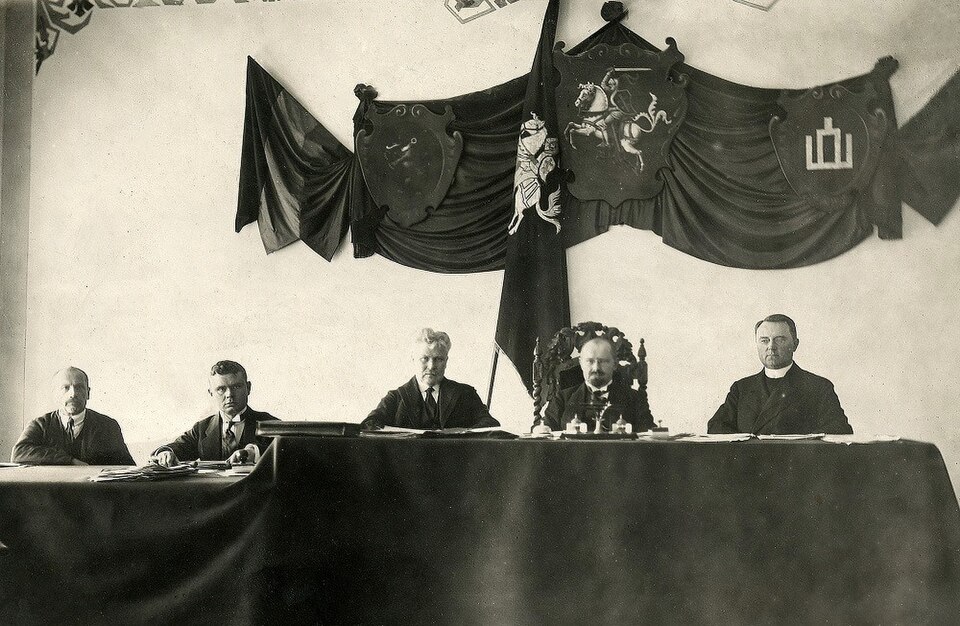
The Constituent Assembly met after the first democratic election and elected Aleksandras Stulginskas as Chairman. A woman, Gabrielė Petkevičiaitė-Bitė, chaired the inaugural meeting.
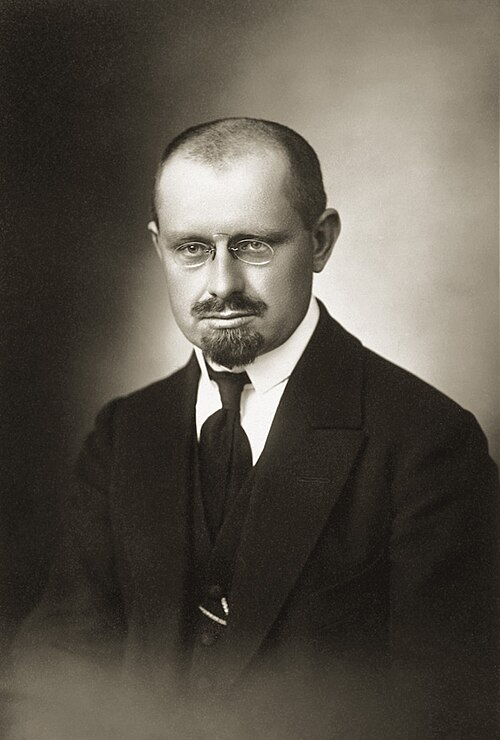
Aleksandras Stulginskas (1885-1969), a signatory of the Act of Independence, was elected the President of the Republic of Lithuania. He served until June 1926.
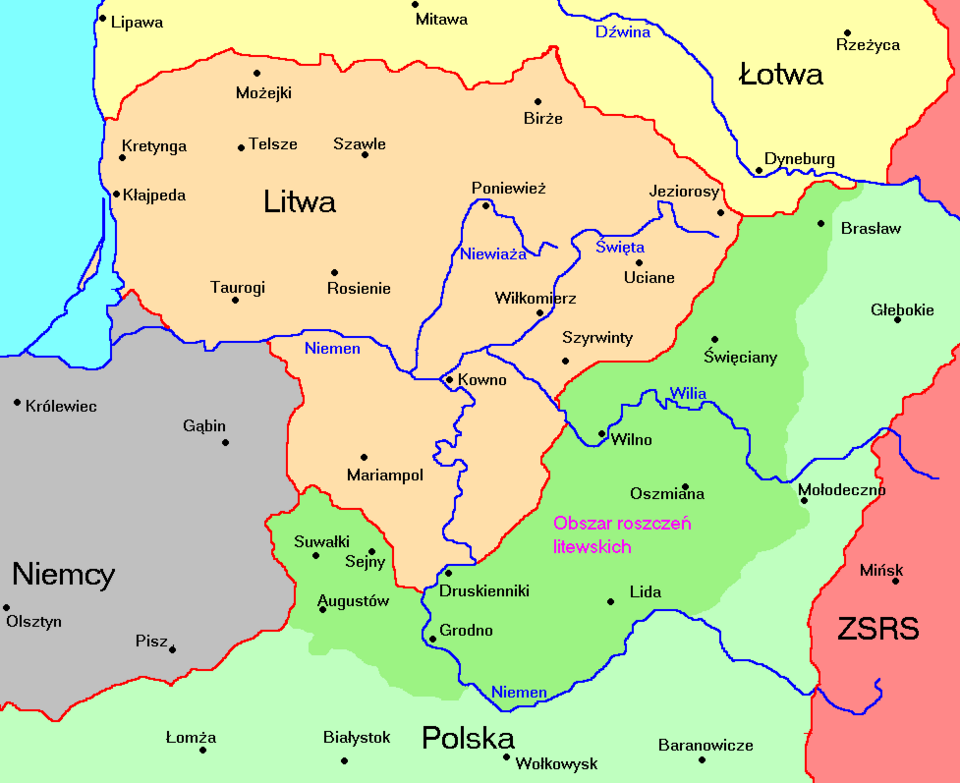
Soviet Russia recognized Lithuania’s independence and acknowledged Lithuanian authority over the Vilnius region, which had been occupied by Poland.
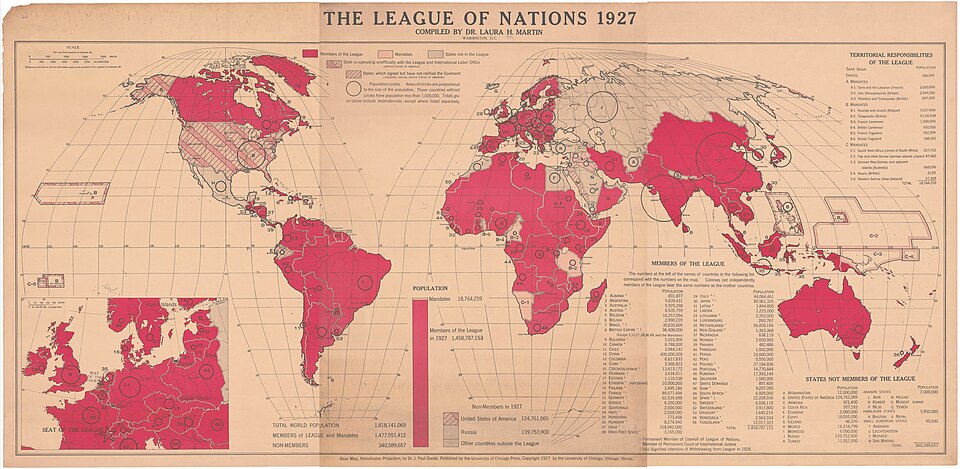
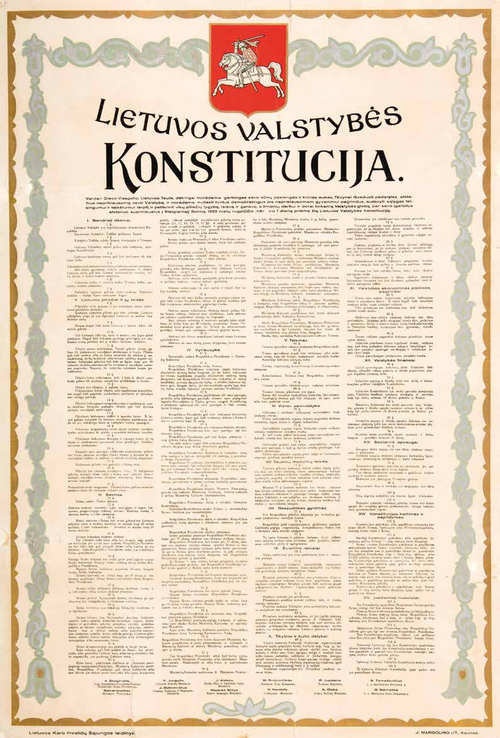
Lithuania was declared a democratic republic, modeled after France. Power was granted to a parliament (Seimas) which elected a Cabinet of Ministers and a President serving three years.
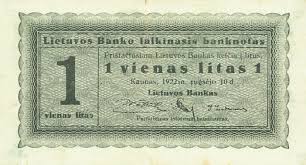
Lithuania established its own national currency, the Litas.
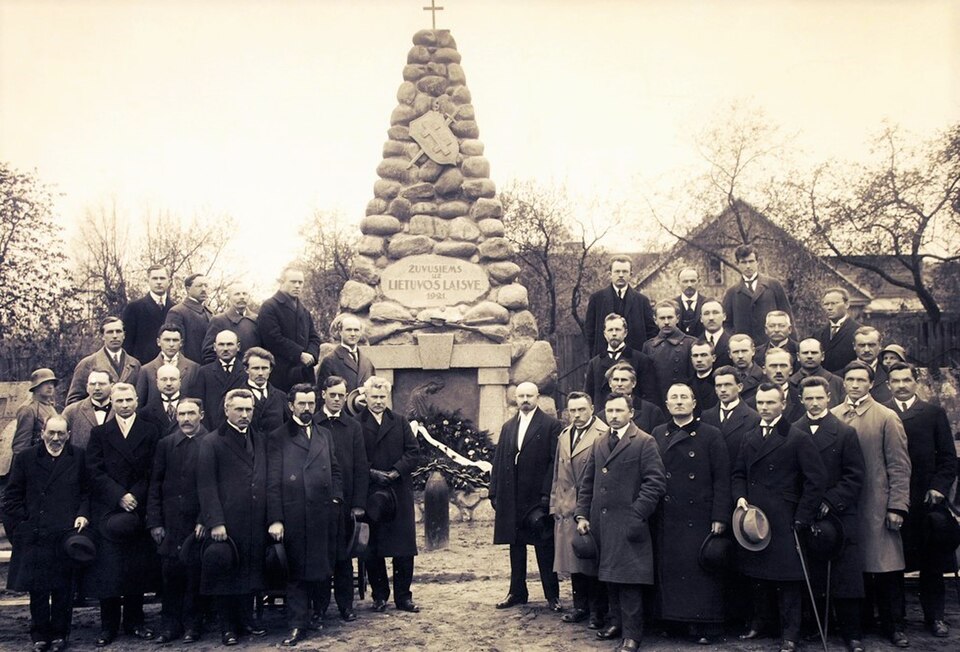
After the adoption of the new constitution outlin new government powers and infrastructure, the Constituent Assmebly was able to resign and transfer power tot he new structure.
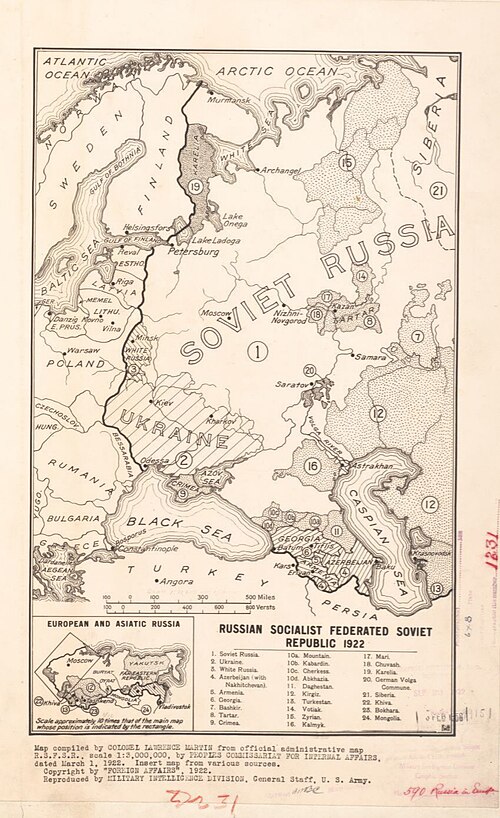
The Treaty was created and signed by Russian, Transcaucasian, Ukrainian, and Byelorussian communist delegates, forming a union under a new federal government in Moscow. Vladimir Lenin (1870-1924) was the first leader of the USSR.
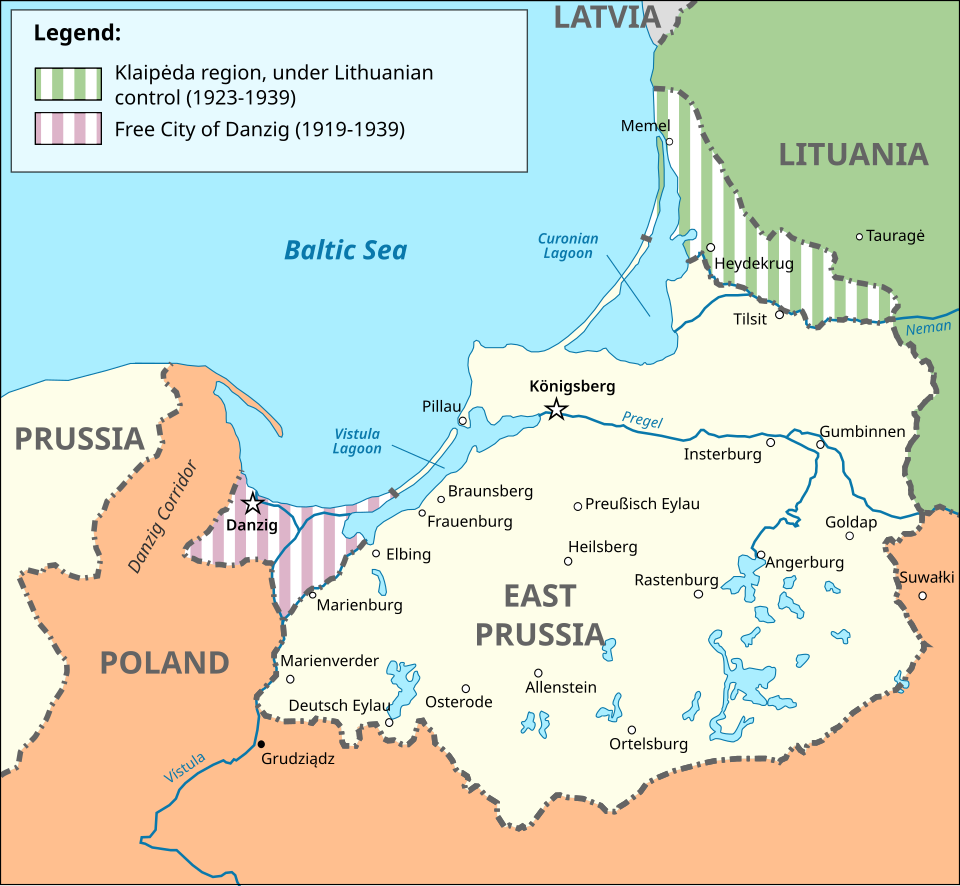
During WWI, the Klaipėda region was occupied by Germany, but after Germany’s surrender, it was placed under French administration because of ongoing disputes with Poland and its claims to the territory. When diplomacy failed, Lithuanians mounted a revolt and seized the territory.
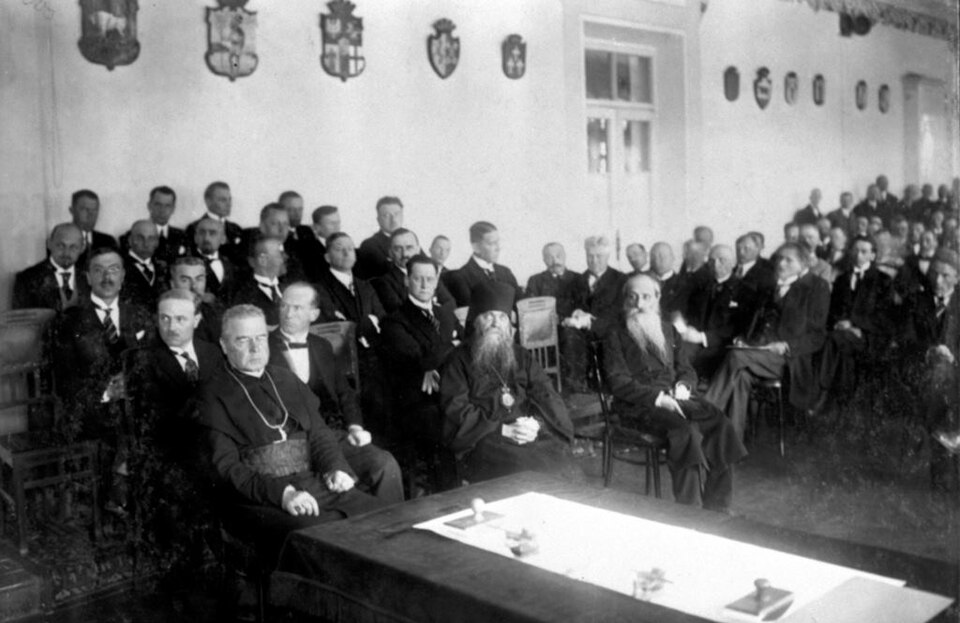
The First Seimas (parliament) was dissolved due to a virtual deadlock, as no party or coalition could gain a majority. The Second Seimas was democratically elected, and deputies served a full term. Aleksandras Stulginskis was re-elected as President of Lithuania.
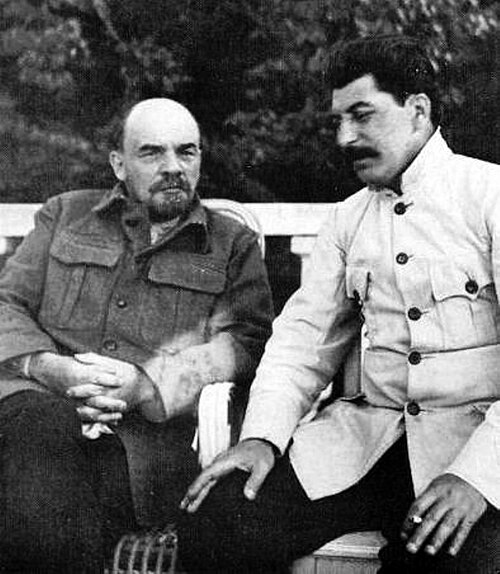
The founder of the Bolshevik movement and the USSR, Vladimir Lenin, died. He did not want Stalin to rule the USSR and believed he should be removed from power due to his brutality and quest for power. After Lenin’s death, a power struggle ensued, but Stalin prevailed.
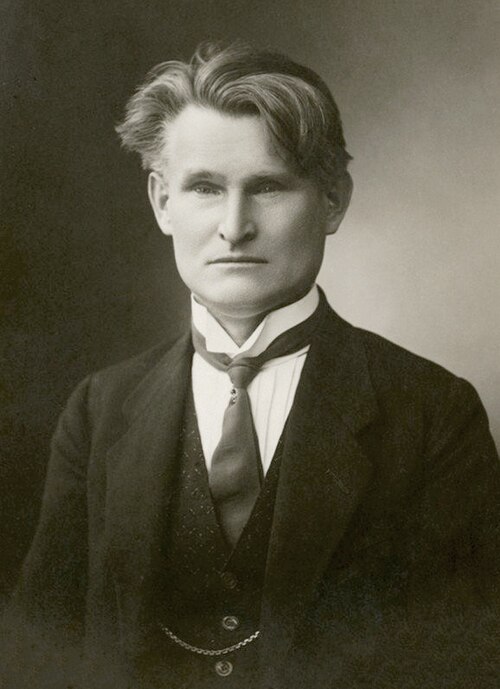
Kazys Grinius (1866-1950) was elected by the Third Seimas (pariliament) but only served until December 1926 when he was deposed in a cou’d’etat.
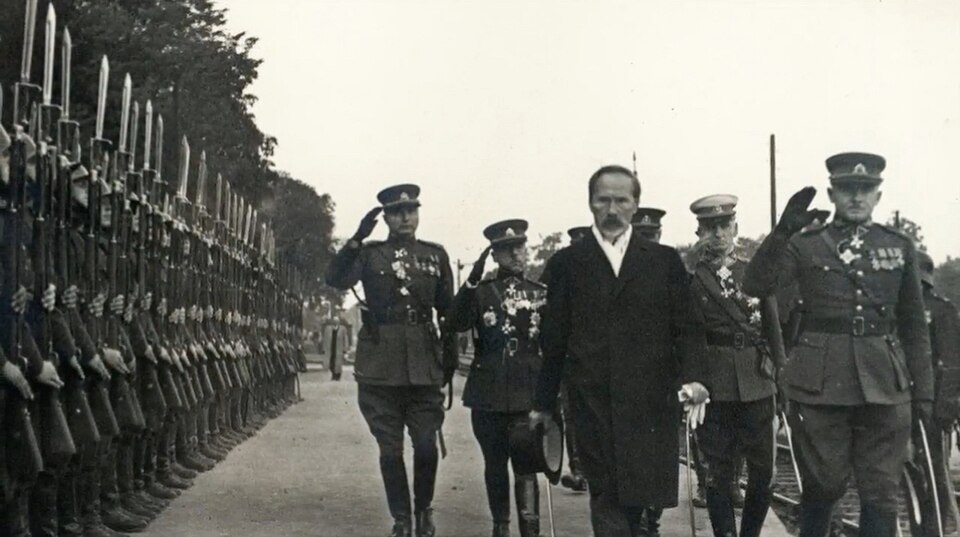
Lithuania’s first president, Antanas Semtona staged a coup-d-etat and took power. He became the authoritarian head of state and ruled until WWII. When the USSR invaded he escaped to the United States where he died in 1944.
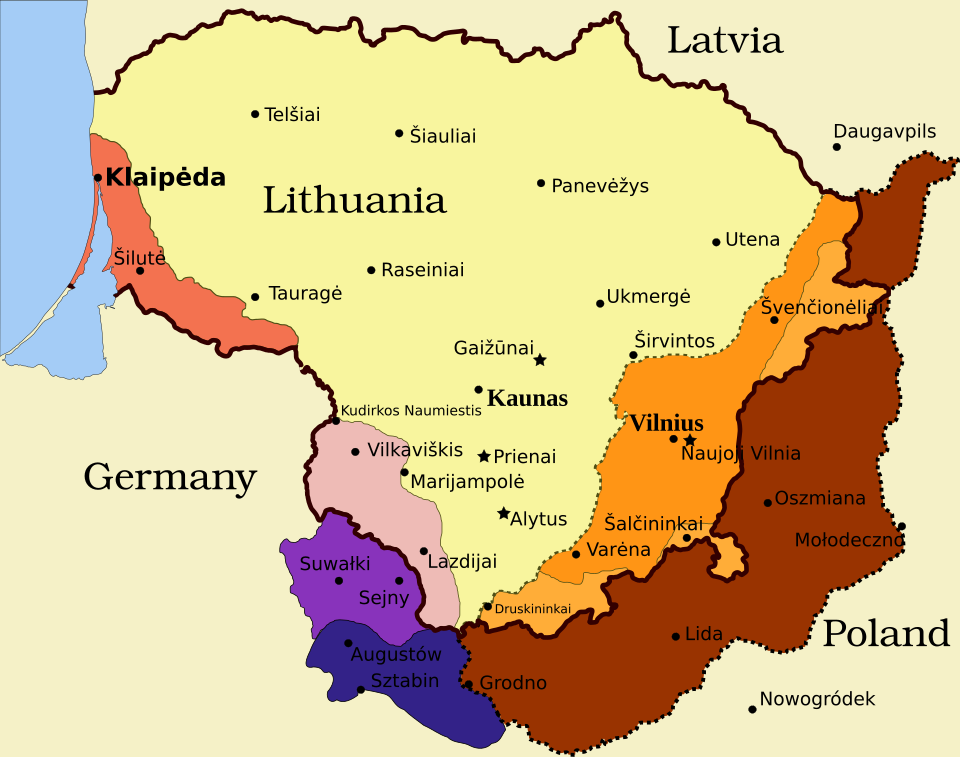
Poland demanded the re-establishment of normal diplomatic relations that were broken after the 1920 war and threatened military action in the event of refusal. Lithuania, having a weaker military and unable to enlist international support for its cause, accepted the ultimatum, yet still maintained its legal claim to Vilnius.