CLASSROOM RESOURCES
Lithuanian History Timeline

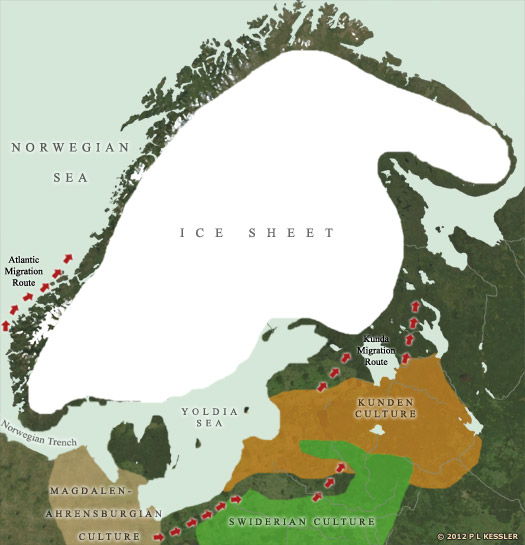
As glaciers receded, people began to inhabit the Baltic Sea region. Baltic Magdalenian culture used broad flint arrowheads, short, broad scrapers, and bone, horn, and antler items (hoes, harpoons, ice picks). 40 campsites are currently known to have existed in Lithuania.
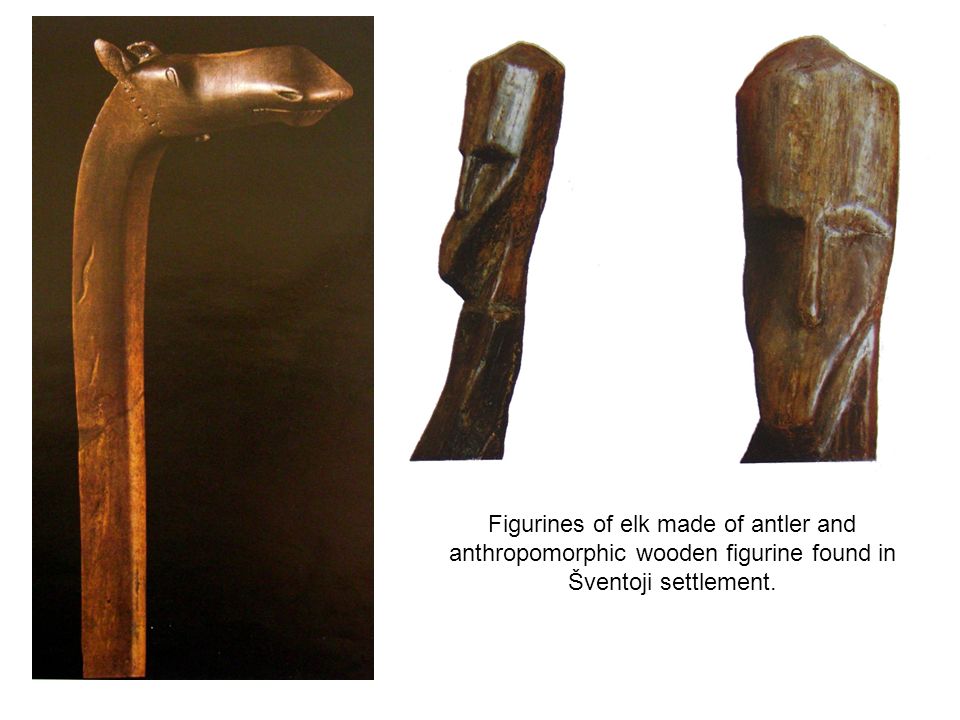
Evidence of religious worship of the Lord of Nature. Archaeological find of a two-meter-tall wooden idol from Šventoji, depicting a deity with a carved human face, attributed to this time period. Also found were three ritual sticks with a carved elk doe head.
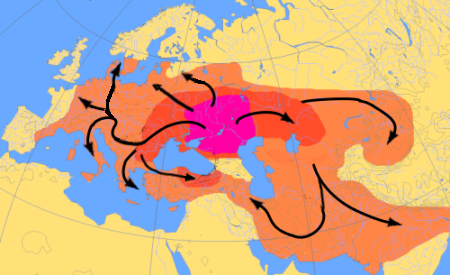
The Indo-Europeans brought their language and the Corded Ware culture into the region, intermingling with local tribes. Lithuanian, Latvian, and Prussian languages developed in the following centuries. Today’s Lithuanian language retains many Proto-Indo-European features, making it the oldest living spoken language.
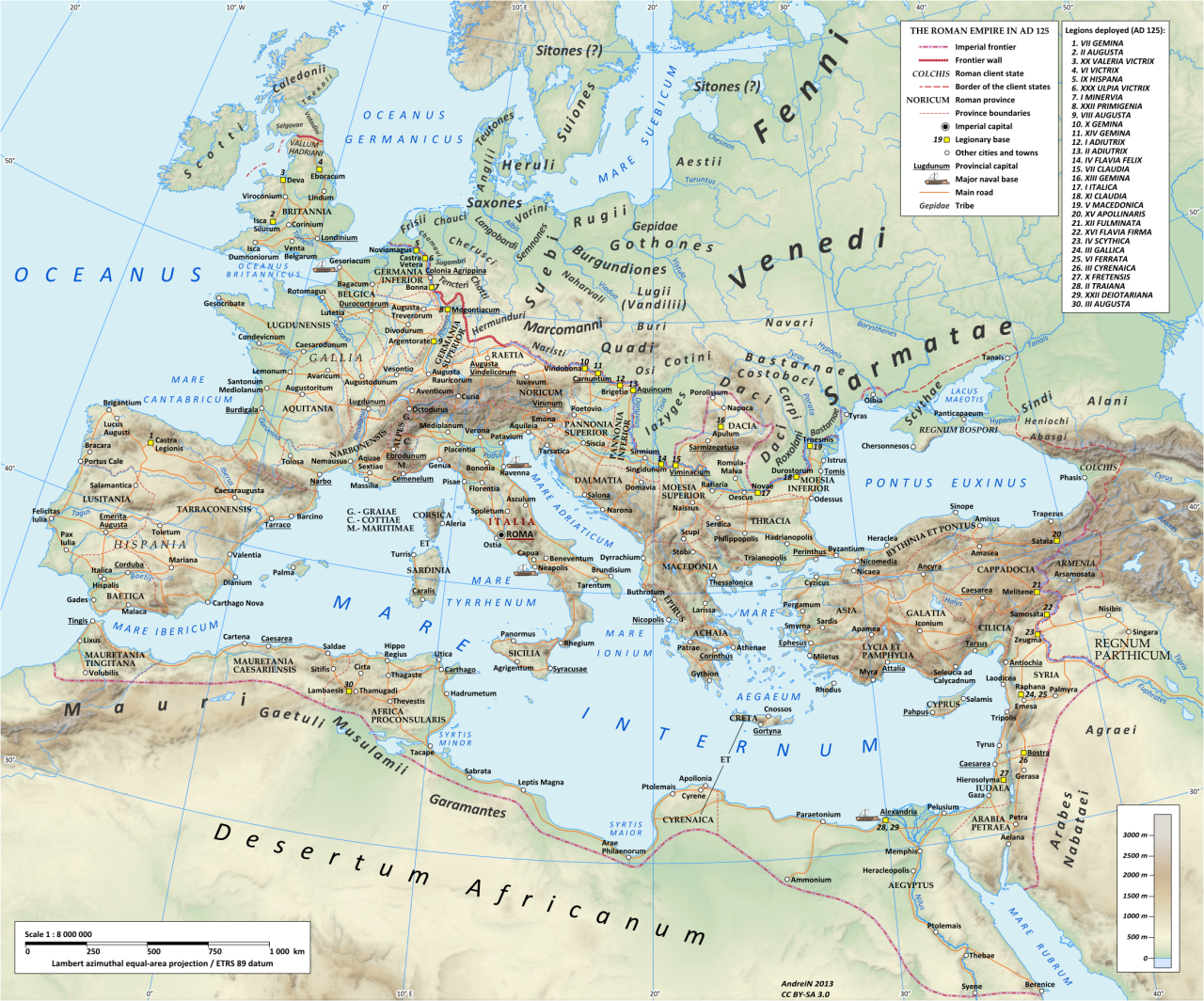
The Roman Senator and historian Tacitus (50-120) wrote of the Aesti people, known as amber traders, who lived along the shores of what are now Lithuania, Latvia, and Estonia.
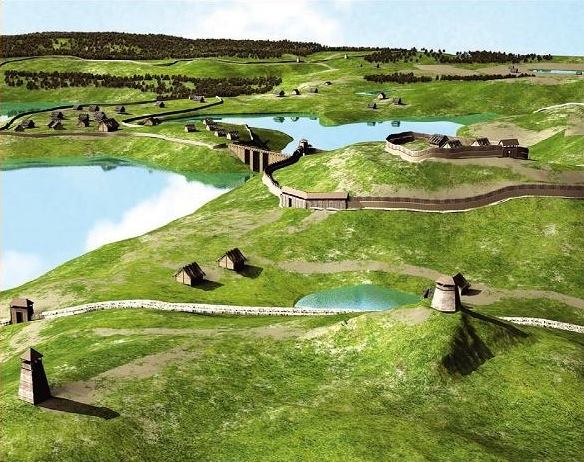
Greek Geographer Ptolemy (100-170) mentions the Galindian and Yotvingian tribes who lived in the region now known as Lithuania.
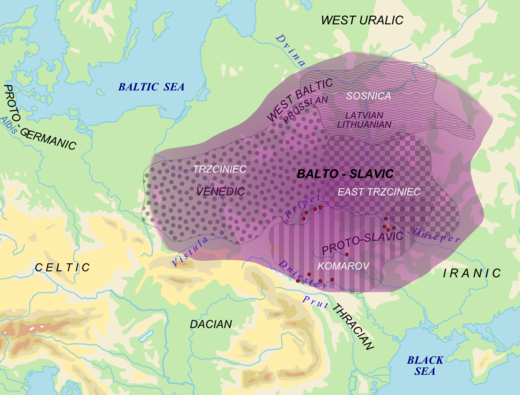
Proto-Baltic-Slavic languages descended from Proto-Indo-European. Slavic languages split around 1500-1000 BCE, and the single branch called Proto-Baltic comprised Lithuanian, Latvian, and Prussian. Lithuanian split from these in the 7th century.
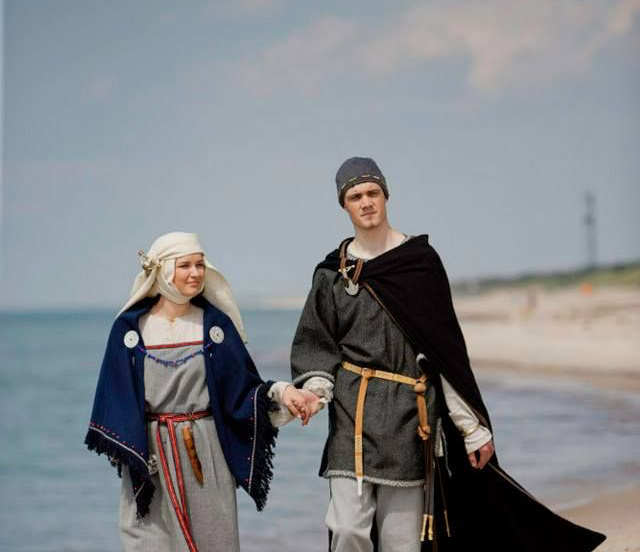
Major Baltic tribes emerge: Curonians, Sellonians, Samogitians (lowlanders), Lithuanians, Aukštaičiai (highlanders) and Semigalians.
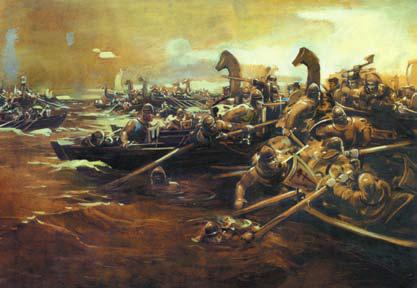
In the sagas, Vikings mounted raids on the Curonians in 675. The Danes attacked in 853, the Swedes in 854.
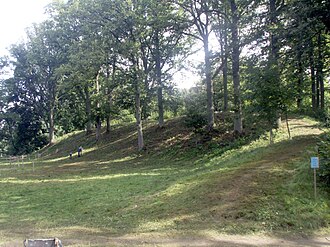
Apuolė was an important hill fort for the Curonian tribe. Located in the Klaipėda county near Skuodas, near the North-West border of today’s Latvia. Apuolė was mentioned by Rimbert in his Vita Ansgari chronicles describing Viking’s attacks in the area.
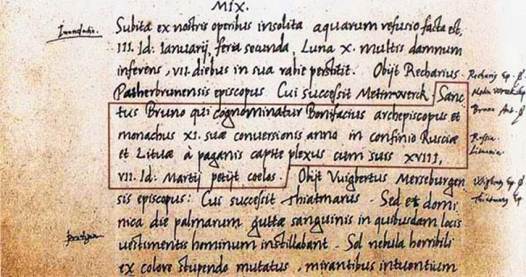
Written in the Annals of Quedlinburg: “[In 1009] St. Bruno, an archbishop and monk, who was called Boniface, was slain by Pagans during the 11th year of this conversion at the Rus and Litua border, and along with 18 of his followers, entered heaven on March 9th.”
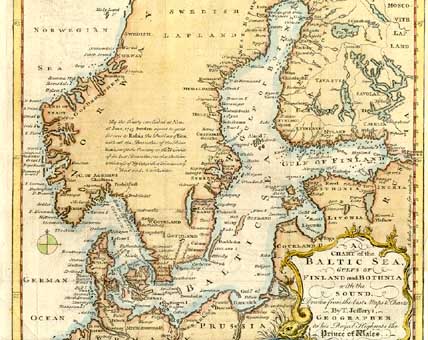
Adam of Bremen (1050-1081), a German chronicler, reported adopting the local term, Balticus, from baelt (belt) because the sea stretches across the land to the east in the manner of a belt.
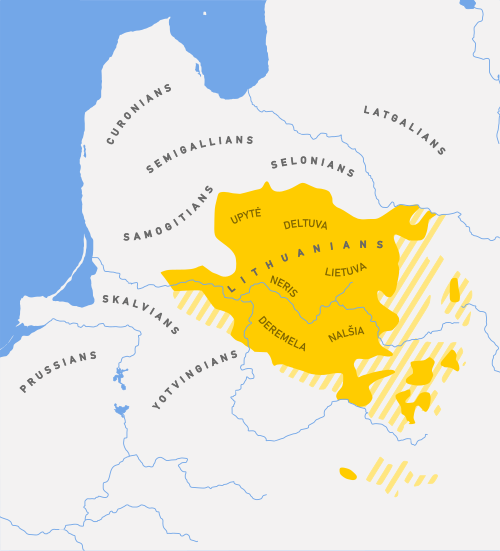
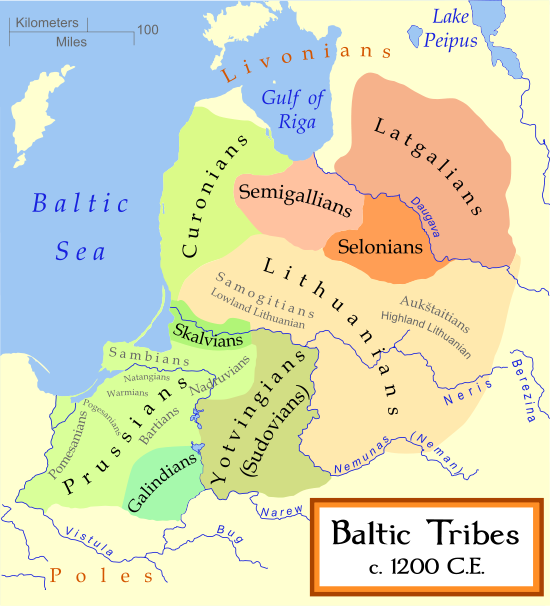
Various Baltic tribes ruled the Baltic Sea region: Latgalians, Samogitians, Aukštaičiai, Curonians, Prussians, Skalvians, Yotvingians, Galindians, Semigallians, and Selonians.
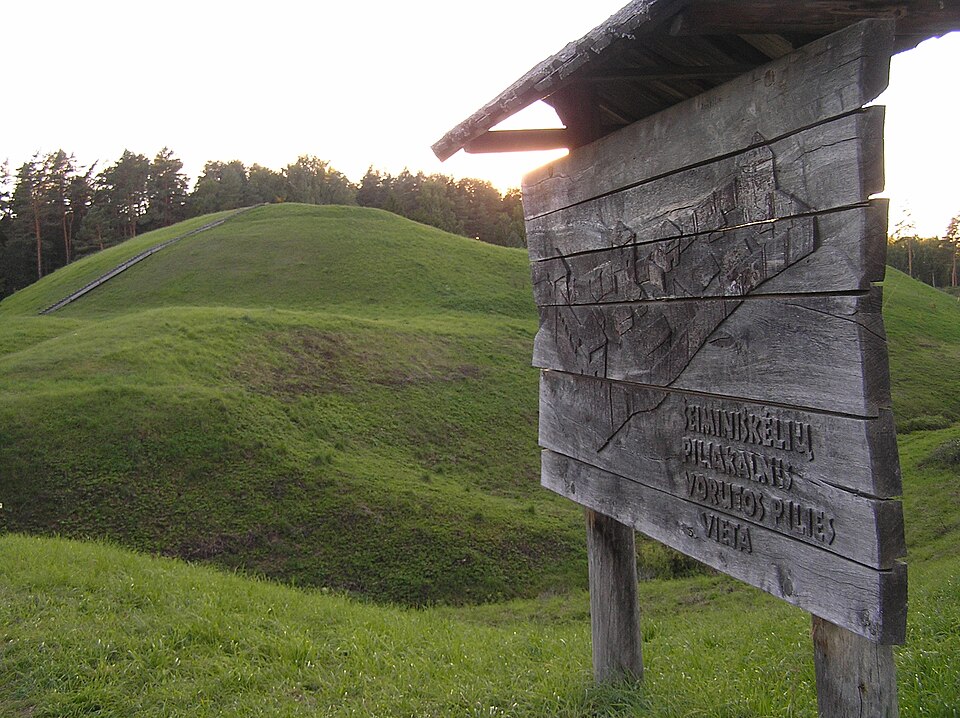
Voruta is mentioned in contemporary written sources as Lithuania’s possible capital during the reign of King Mindaugas. The exact location of Voruta is unknown, but scholars have recently pointed to Seiminyskeliu as a possibility.
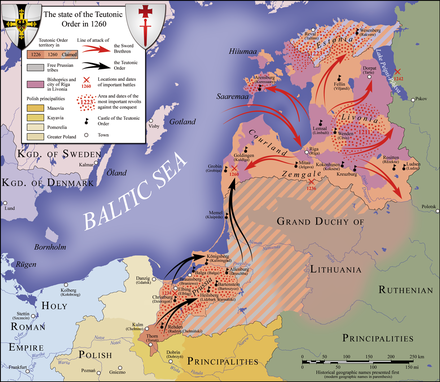
The Teutonic Order and the Livonian Order mounted unsuccessful raids in the Baltic region over the following 100 years.
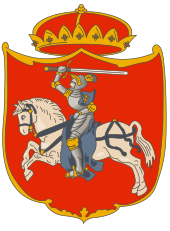
The Baltic Tribes were forced to unite to battle the ongoing attacks from Christian Crusaders. The feudal system of land ownership was established; therefore, an organized social structure emerged from the necessity of maintaining social order.
The Livonian Brothers of the Sword were formed in Riga in 1202 to conquer and convert Baltic pagans to Christianity. The three thousand Christian crusaders marched into Samogitian territory for battle but were defeated and decimated by the Lithuanian Duke of Samogitia, Vykintas, and his five thousand-strong forces.
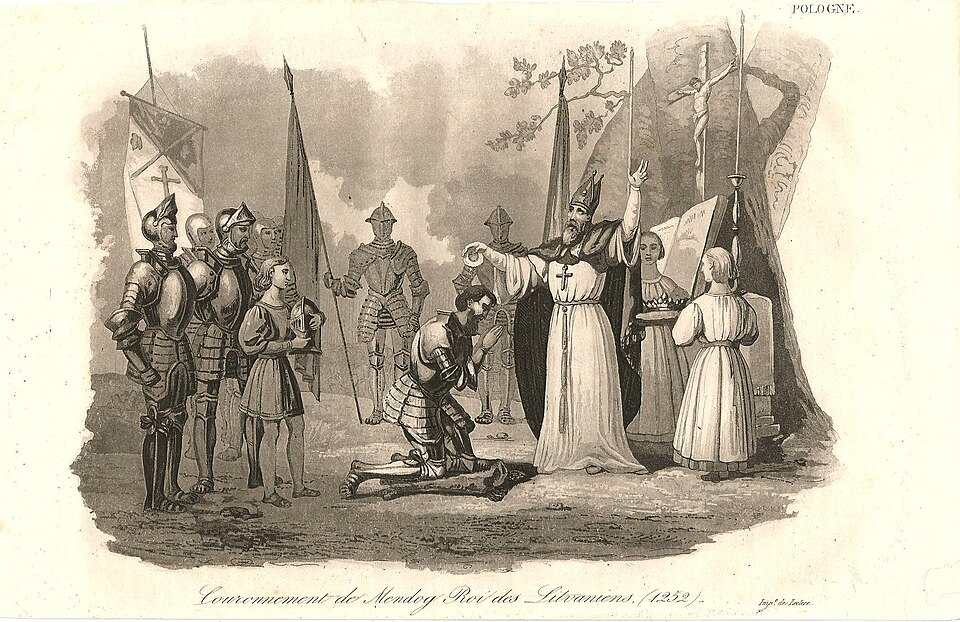
Mindaugas united the Baltic tribes, establishing the Kingdom of Lithuania. The total population of the Kingdom was 400,000, and the territory covered 77,000 square miles.
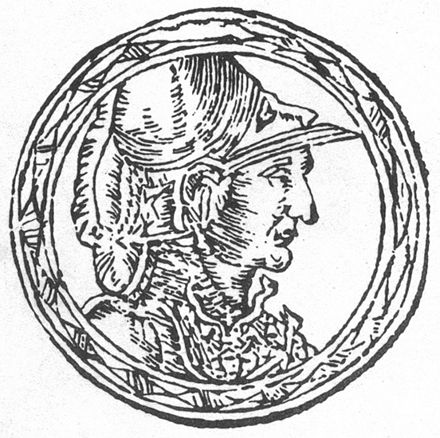
During Grand Duke Traidenis’ reign, which began in 1269, Lithuanian territory was extended into Sudovia, Semigalia, and Black Ruthenia. A devout pagan, Traidenis defeated many incursions by the Livonian Order.
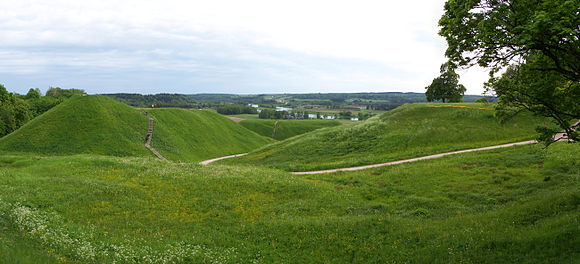
Kernavė had been the site of settlements since the end of the Paleolithic Era. Kernavė was the capital during the reign of Grand Duke Traidenis. The Teutonic Knights mounted many unsuccessful raids on the capital. But the area was eventually burned down in 1390 during the Lithuanian Civil War.
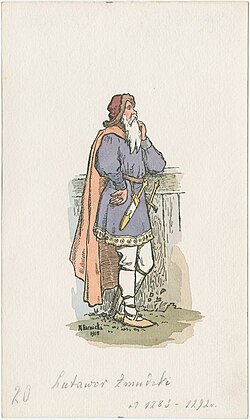
Butvydas’ reign lasted a short time, from 1290 to 1295. It is believed that he is Gediminas’ father.
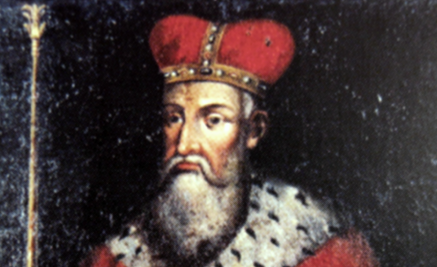
Vytenis’ reign was plagued by constant warefare with Crusaders. He secured Lithuania’s standing in the region with alliances with Riga and successful comapaigns against the Livonian Order.
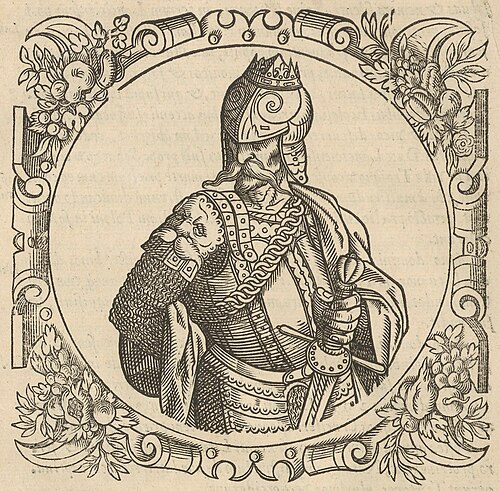
Gediminas established a dynasty that could be traced to many European dynasties. During his reign, he conquered territory, expanding Lithuania’s territory from the Baltic Sea to the Black Sea.
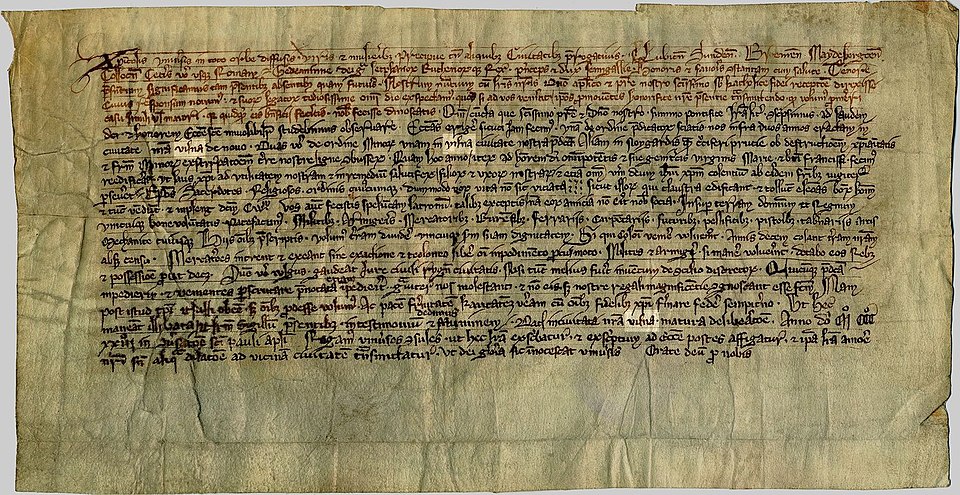
Gediminas founded Vilnius after dreaming of a wolf wearing iron armor howling atop a hill. The pagan priest Lizdeika interpreted the dream and told Gediminas he must build a city on the hill, that the iron armor predicts the city will be indestructable, and the howling of the wolf represents the great deeds of Lithuanians that will be known throughout the the world and history.
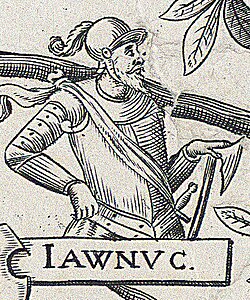
Jaunutis became the Grand Duke of Lithuania after his father Gediminas died in 1341. He was deposed by his brothers Algirdas and Kestutis in 1345.
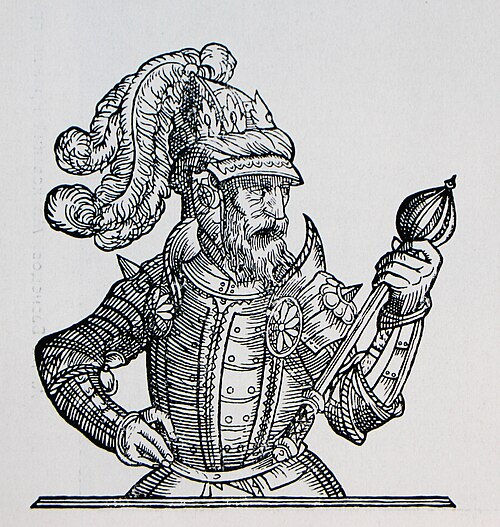
The sons of Gediminas and Kestutis deposed their brother, Grand Duke Jaunutis, and co-ruled the Grand Duchy. They expanded Lithuania’s territory to the Black Sea through conquest.
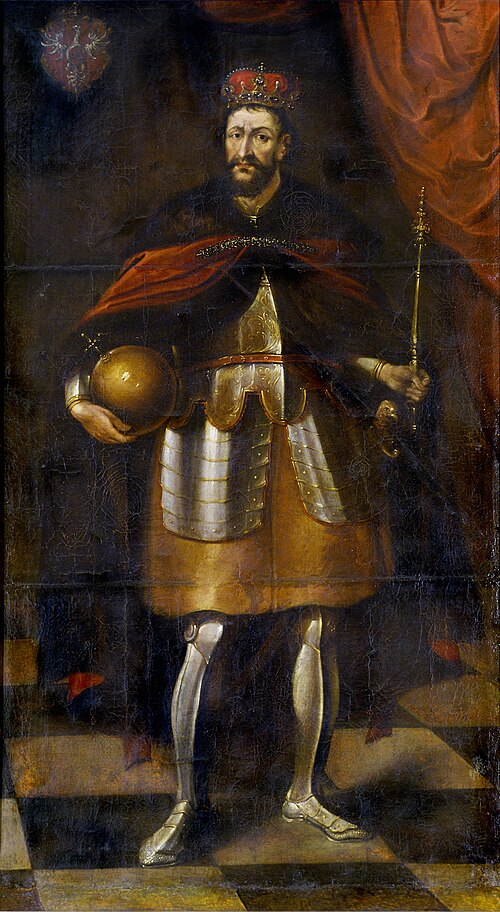
After his father, Grand Duke Algirdas, died, Jogaila became Grand Duke in 1377. Jogaila was the last pagan ruler of Lithuania.
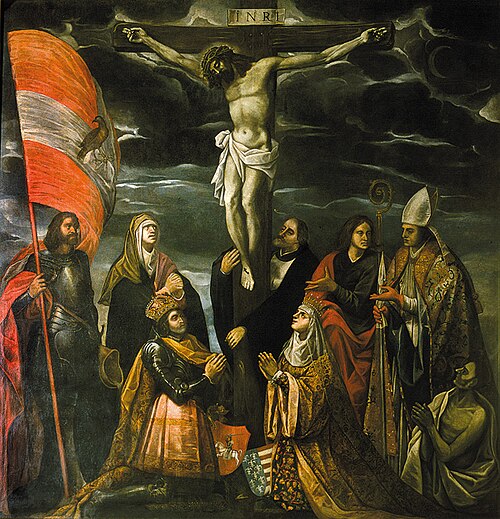
The union makes Lithuanian Grand Duke Jogaila, King of Poland. Jogaila converts to Christianity. Jogaila appoints his unpopular brother Skirgaila as regent in Lithuania, a move that will cause civil unrest in the years to come.
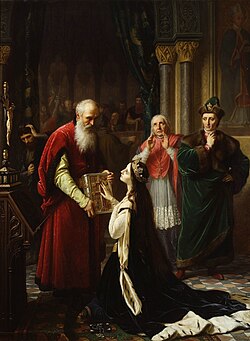
Eleven-year-old Queen Jadvyga of the Piast dynasty was married to Jogaila in the Union of Krewo. Jadvyga died at the age of twenty-five soon after childbirth, as did her daughter. She was the last hereditary ruler of Poland.
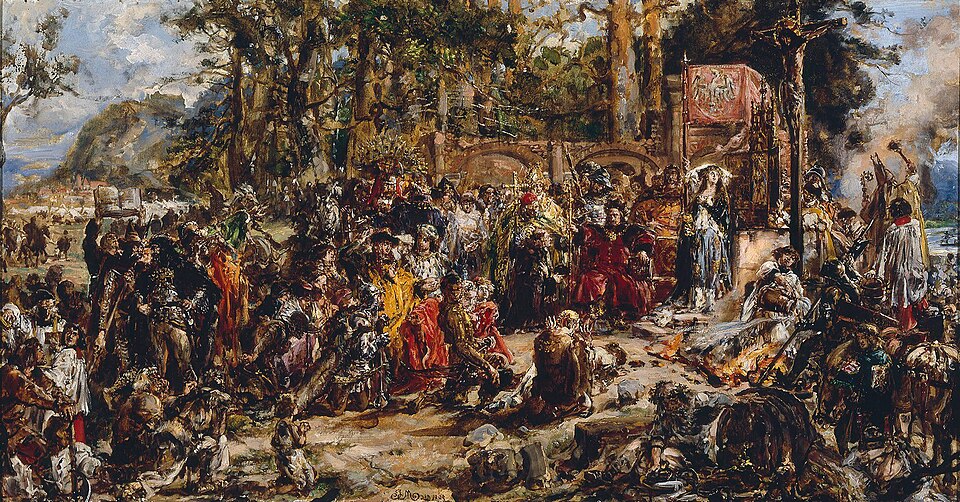
Jogaila’s marriage to Polish Queen Jadvyga signaled the official Christian conversion of Lithuania. Jogail began dismantling pagan sites of worship as nobles and their peasants were baptized.
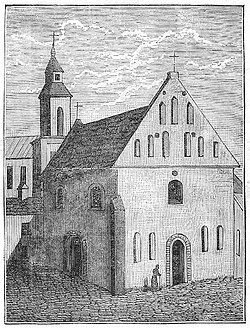
The Church of Saint Nicolos was first mentioned in writing in 1387, and predates the official Catholic conversion of pagan Lithuania.
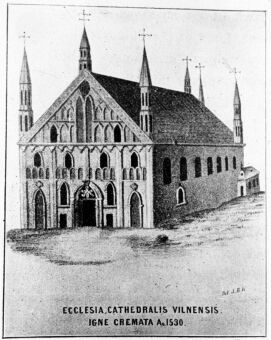
Jogaila built the Cathedral on the ancient pagan site of Perkūnas (thunder god). It’s possible that a wooden church built by Mindaugas after converting to Christianity stood on the site before. Jogaila’s church burned down in 1419. Vytautas re-built the church, part of it remains today.
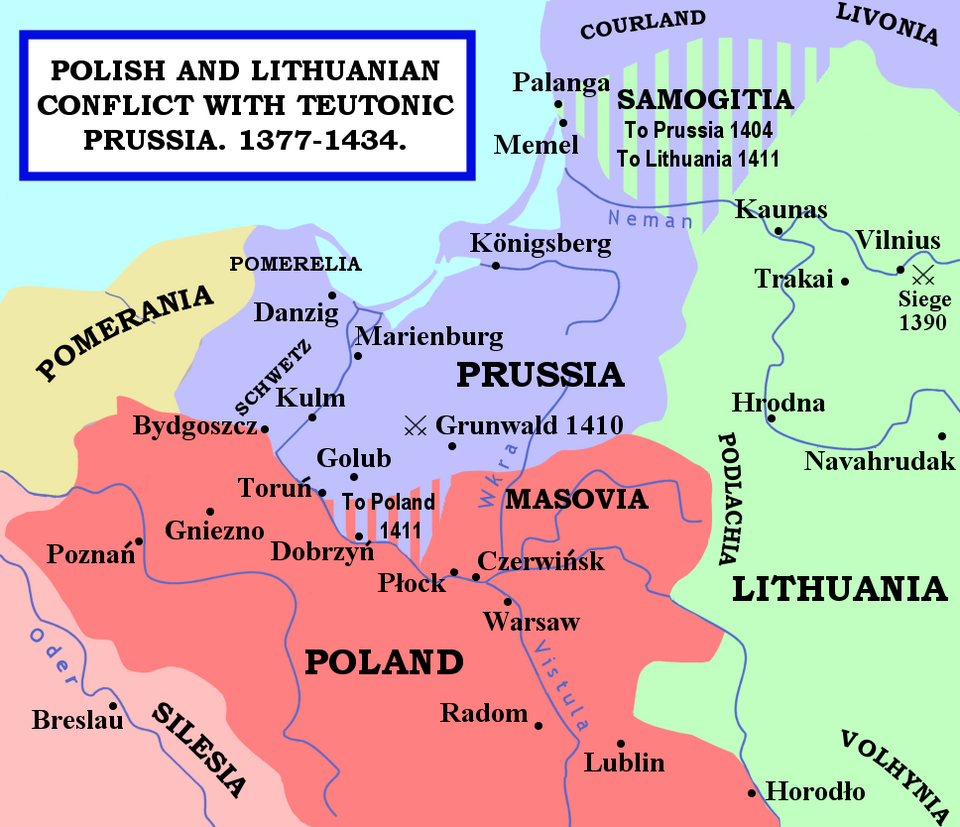
As Jogaila converted to Christianity, he made a secret treaty with the Teutonic Knights, which threatened the power of his uncles, Algirdas and Kestutits, and the lands they controlled (present-day Lithuania, Belarus, Ukraine, Transnistria, parts of Poland and Russia). Kestutis’ son, Vytautas, led the rebellion against Jogaila.
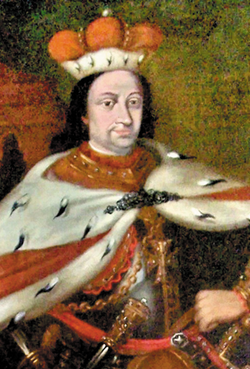
To end the civil war, Jogaila conceded to Vytautas, making him the Grand Duke and co-regent of Lithuania. Jogaila ensured Vytautas was his vassal, changing his title to Supreme Duke of Lithuania, with Vytautas agreeing that upon his death, his lands would go to the King of Poland.
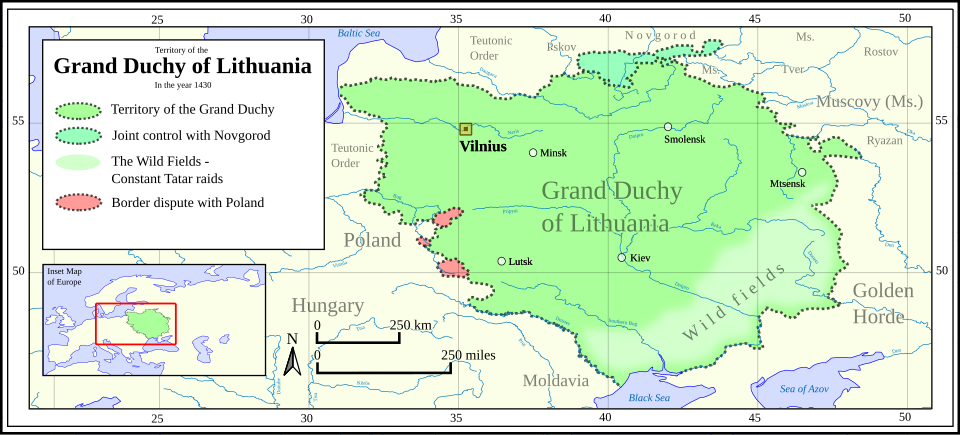
Vytautas mounted many campaigns to extend Lithuanian territory, which stretched from Pskov and Novogrod to the Black Sea.
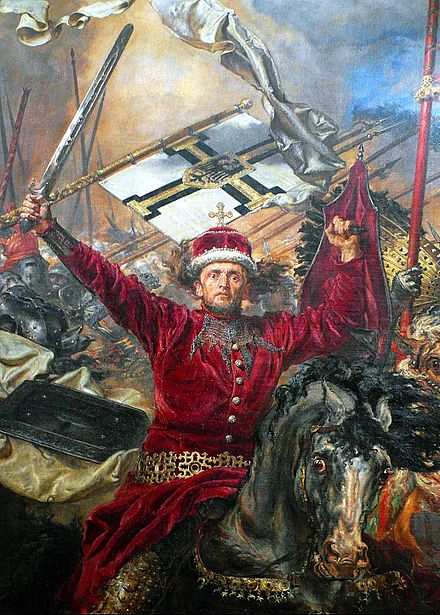
The Teutonic Knights suffered a major defeat from the united forces of Lithuanian Grand Duke Vytautas and the King of Poland Jogaila, shifting the balance of power from Western Europe to Eastern Europe.
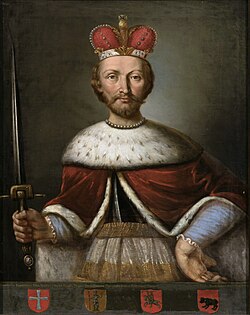
Sigismund became Grand Duke of Lithuania in 1432 after the death of his uncle, Vytautas.
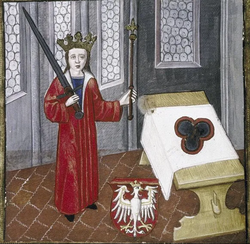
Ten-year-old Władysław III ascended the throne in 1434 after his father, Jogaila, died. He died at the age of twenty, going into the Battle of Varna.
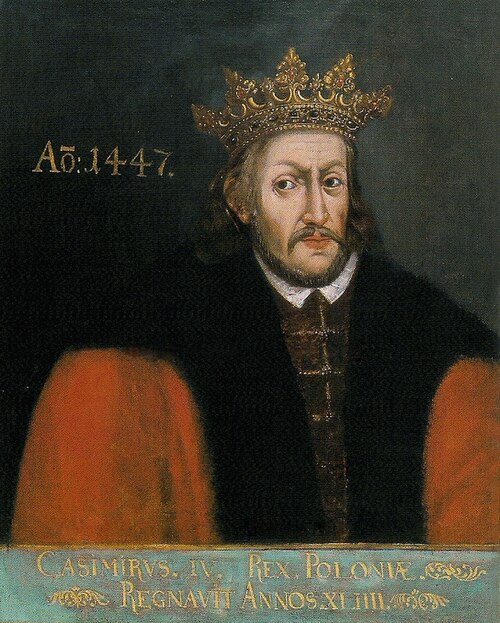
Upon the death of Sigismund Kestutits, Casimir IV (Jogaila’s 3rd son) became the Grand Duke of Lithuania in 1440. Despite initial objections from the Polish nobility, who argued that he was not of Polish royal blood, Casimir IV was elected King of Poland in 1447.
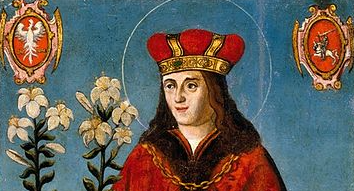
Casimir was heir apparent to the throne, but he was pious and devoted to God and turned to religious life. But he died from tuberculosis at the age of twenty-five, after which, several miracles were attributed to him. He was cannonized in 1501, and is the patron saint of Lithuania.
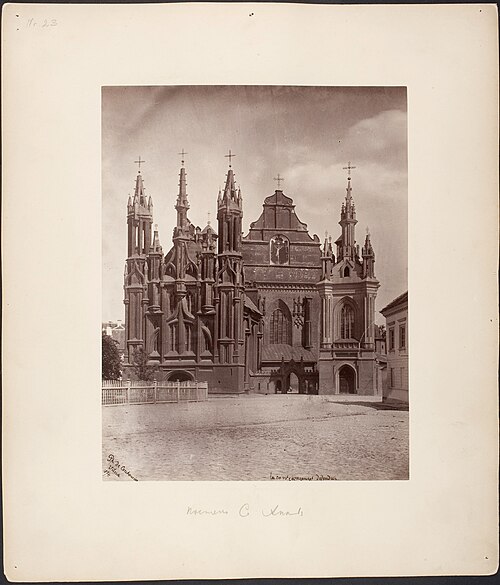
The first church at this site was constructed for Vytautas the Great’s wife, Anna, but was destroyed in a fire in 1419. King of Poland and Grand Duke of Lithuania, Alexander Jagiellon, began construction of the brick church in 1495.
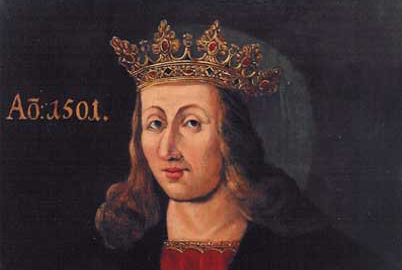
Alexander was made Grand Duke after the death of his father Casimir IV and elected King of Poland in 1501.
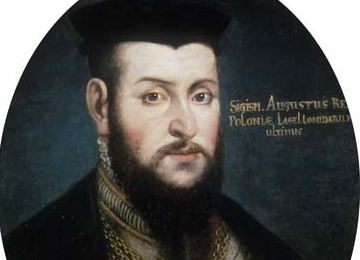
Nine-year-old Sigismund II was elected King and Grand Duke in 1529 while his father was still alive, and . Sigismund the Old co-regent until the younger ruler began his active reign in 1544.
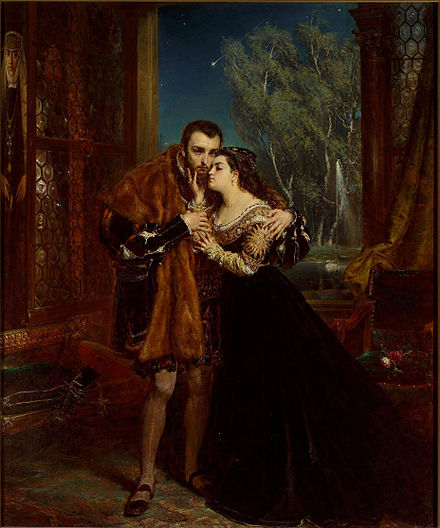
Considered the most beautifual woman in Europe, Barbora Radvilaitė secretly married King and Grand Duke Sigismud II Augustus., against the wishes of the Polish nobility. Their love story was a scandal for the times and her mother-in-law Bona Sforza was rumored to have poisoned her.
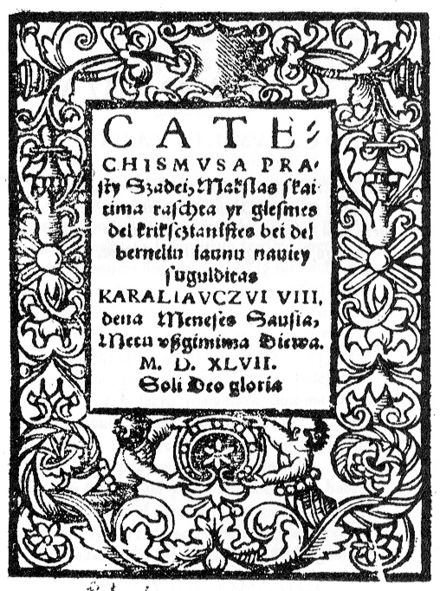
Martynas Mažvydas published ‘The Catechism’ in Königsberg. 200 copies were printed, and only two are known to have survived. One is displayed at Vilnius University and the other at the Nicolaus Copernicus University in Torun, Poland.
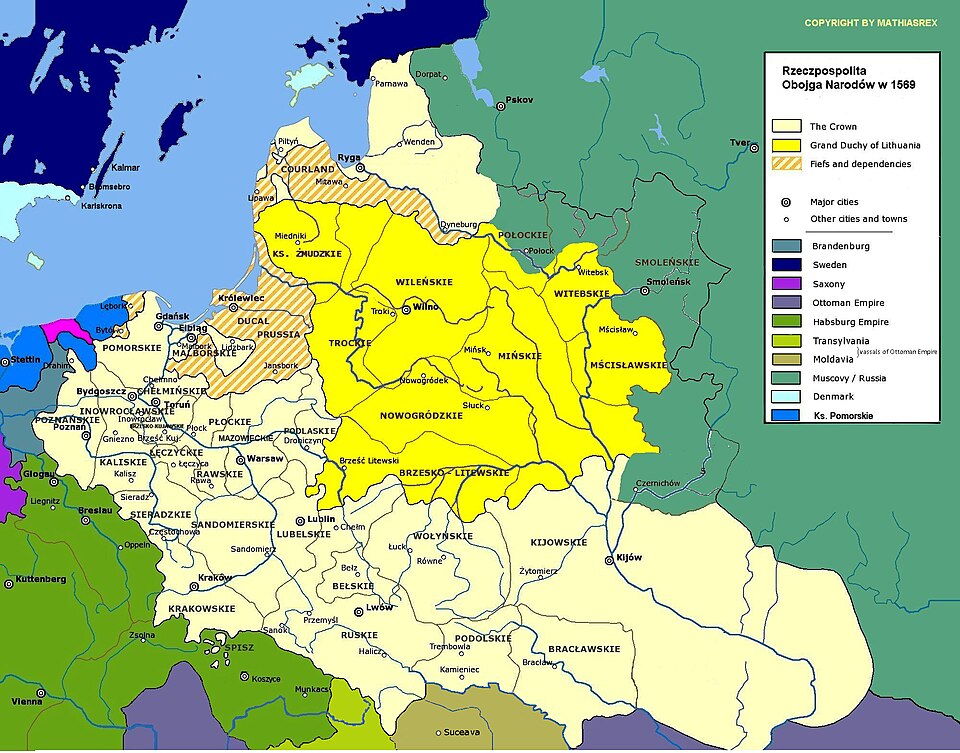
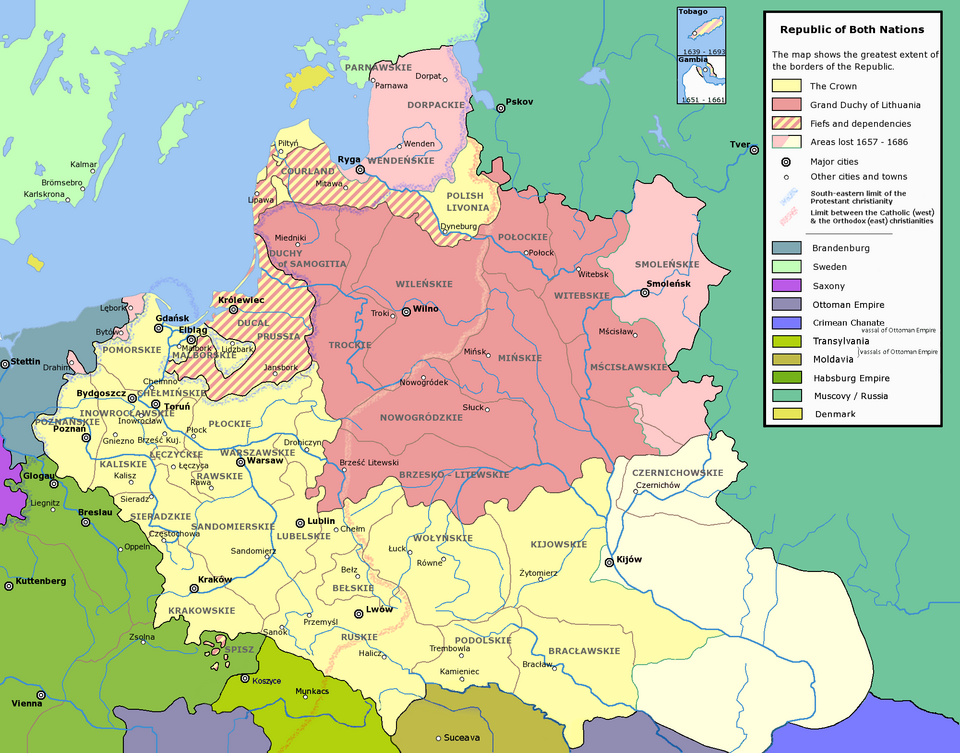
The Polish-Lithuanian Commonwealth, creating a single state, was ruled by a single elected monarch and governed by a common Senate and parliament.
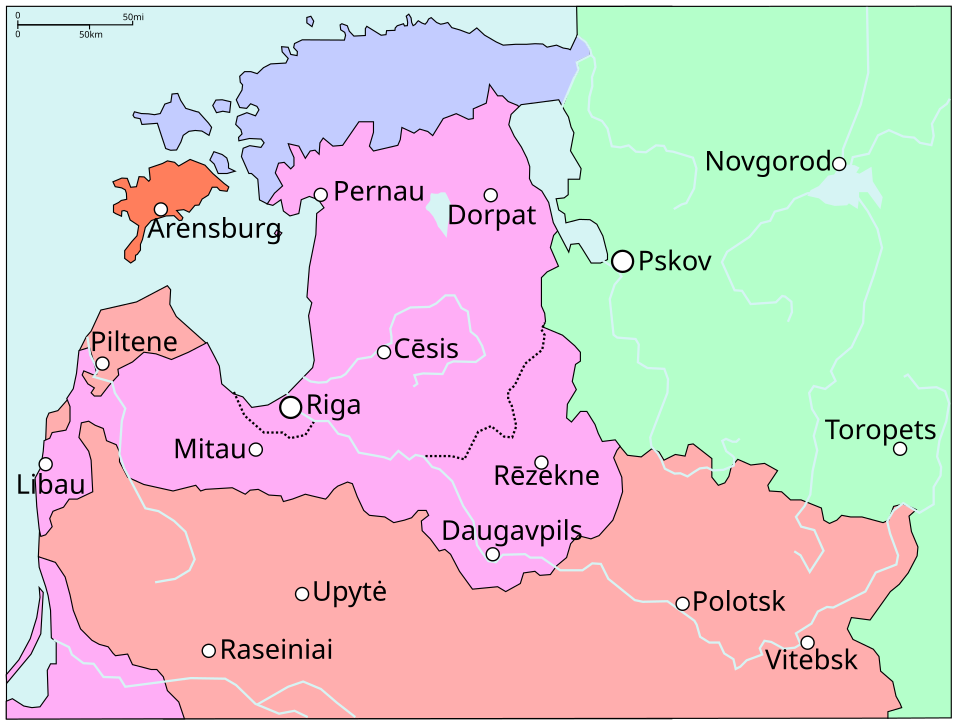
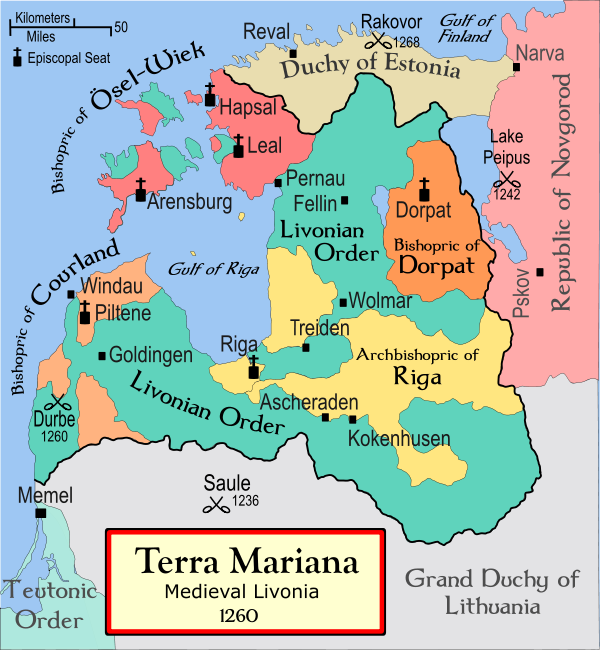
Livonia, also known as Terra Mariana (present-day Latvia and Estonia) was formed in the aftermath of the Livonian Crusade (1198-1290) and divided into theocratic feudal principalities. Russian Tsar Ivan IV invaded Livonia, then invaded Lithuania in 1563. Battles and raged for two deacdes In the end, the Swedish-Lithuanian-Polish alliance defeated the Tsar.
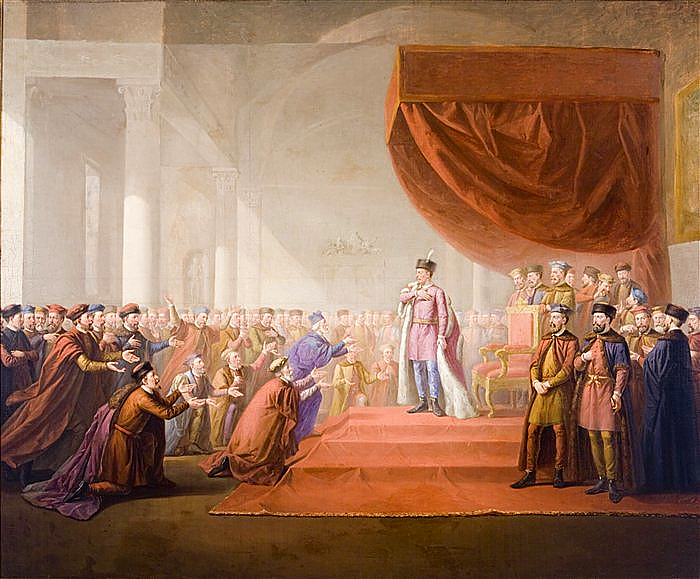
The university was formed when the Lithuanian nobility asked Jesuits to create an institute of higher learning in 1568. The Vilnius Academy was established. In 1579, Stefan Batory, King of Poland and Grand Duke of Lithuania, upgraded the academy, creating the “Alma Academia et Universitas Vilnensis Societatis Jesu.”
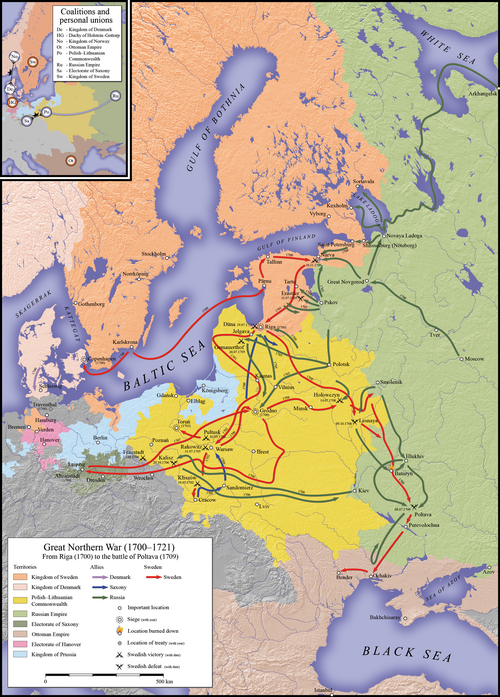
The War impacted the entire Baltic region as Norway, Denmark, and Saxony attacked Swedish territory in Old Livonia. The Swedes then invaded the Polish-Lithuanian Commonwealth. Russia then entered the war, which eventually pulled in Finland, Northern Germany, and Britain. The two-decade war devasted the Baltic region. War, plague, and famine took 40% of the Polish-Lithuanian population