CLASSROOM RESOURCES
Lithuanian History Timeline

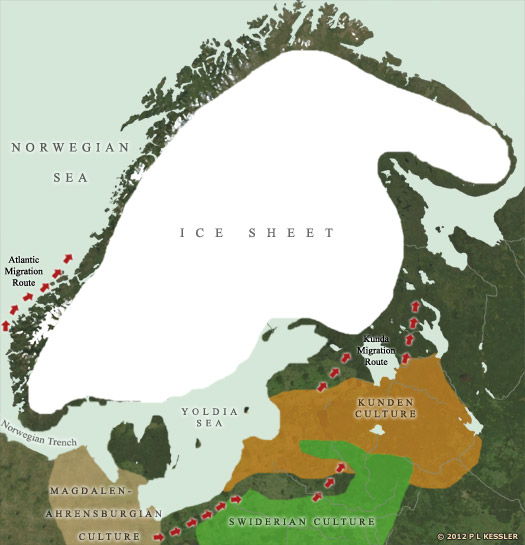
As glaciers receded, people began to inhabit the Baltic Sea region. Baltic Magdalenian culture used broad flint arrowheads, short, broad scrapers, and bone, horn, and antler items (hoes, harpoons, ice picks).
40 campsites are currently known to have existed on Lithuanian territory.
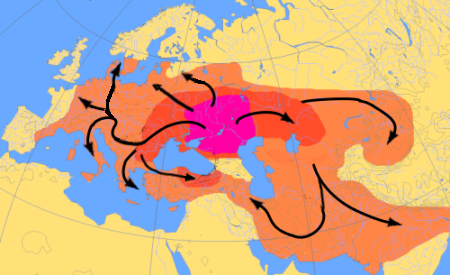
The Indo-Europeans brought their language and the Corded Ware culture into the region, intermingling with local tribes.
Today, Lithuanian retains many archaic features inherited from Proto-Indo-European and is considered one of the most conservative living Indo-European languages.
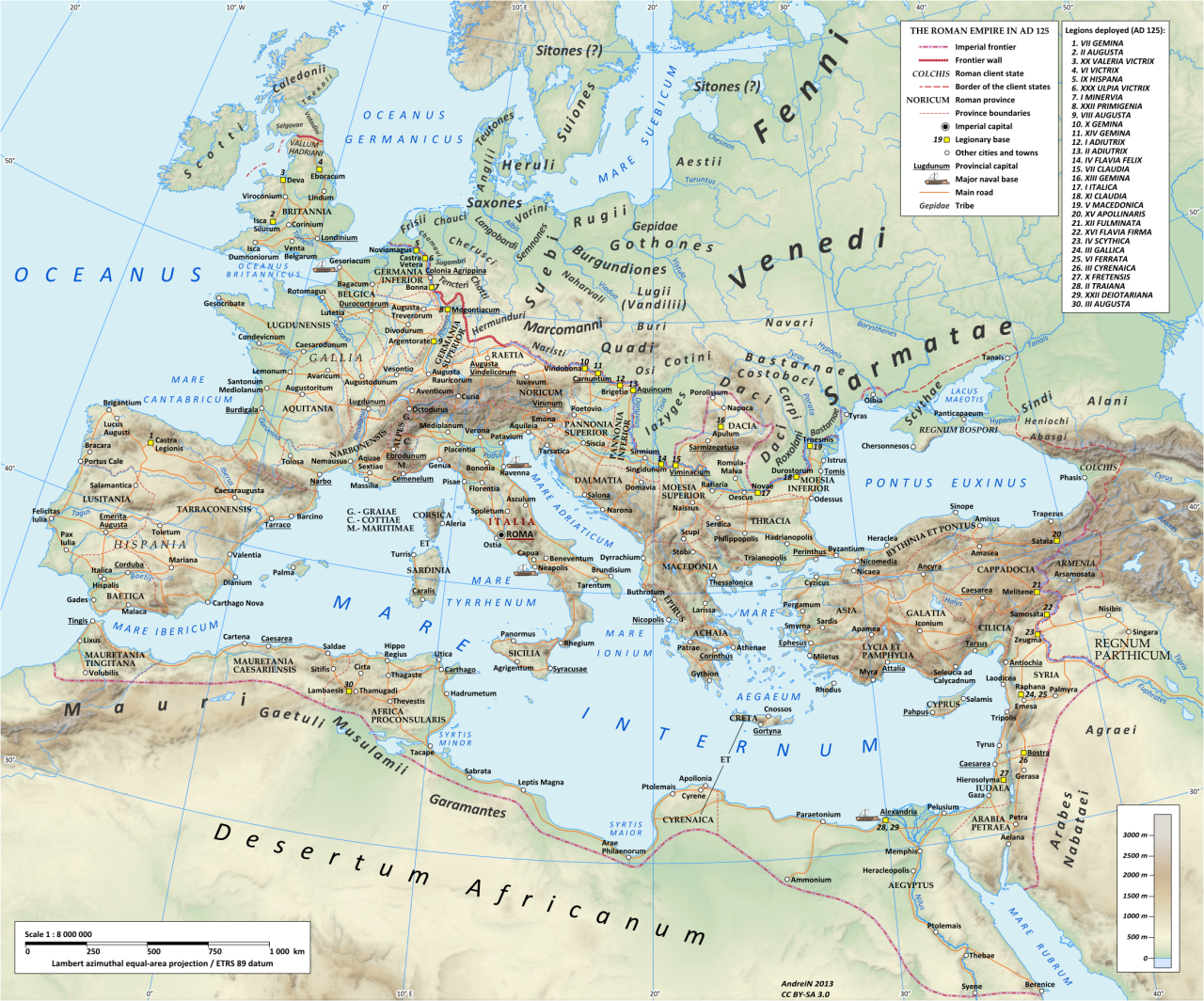
The Roman senator and historian Tacitus (c. 56–120) described the Aesti, a people living along the southeastern Baltic coast who gathered and traded amber.
Scholars have long associated them with the ancient peoples of the Baltic region.
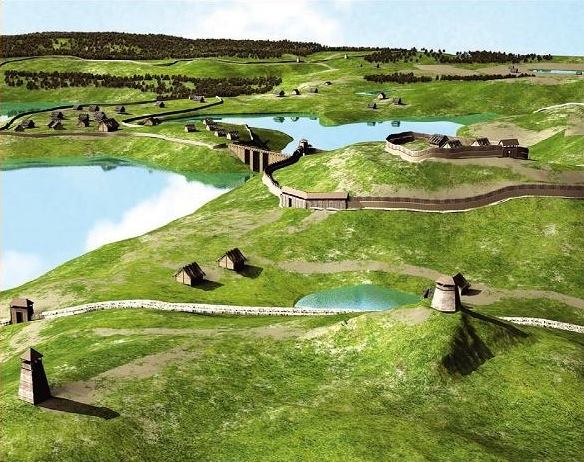
Greek geographer Ptolemy (c. 100–170) mentioned the Galindians and Sudovians, peoples associated with the western Baltic region.
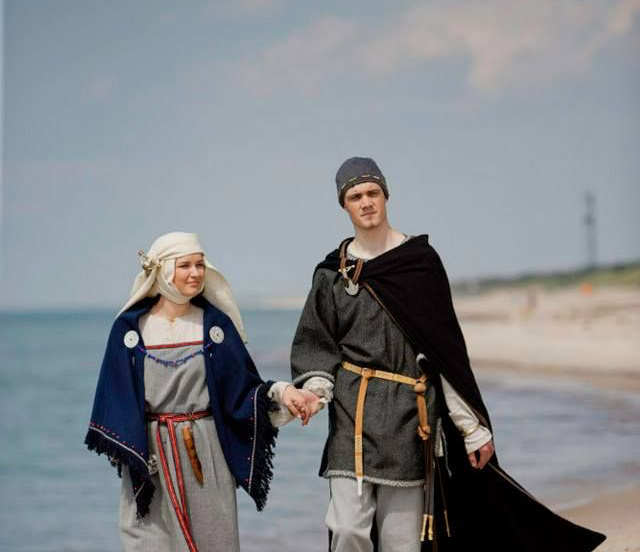
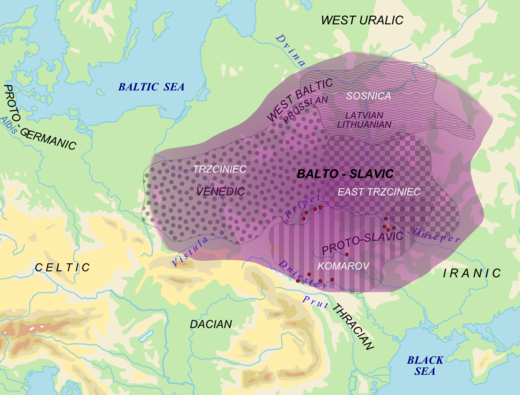
Over many centuries, the Baltic branch of the Indo-European language family developed into distinct languages. Lithuanian and Latvian emerged from the eastern Baltic branch, while Old Prussian belonged to the western Baltic branch.
The precise dates of their linguistic separation remain uncertain.
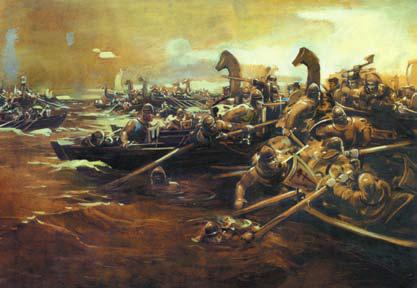
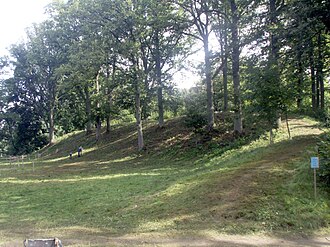
Apuolė was an important Curonian hill fort near present-day Skuodas in northwestern Lithuania.
Rimbert’s Vita Anskarii mentions it and describes a Swedish attack on the settlement in 854.
It is one of the earliest settlements in present-day Lithuania mentioned in written sources.
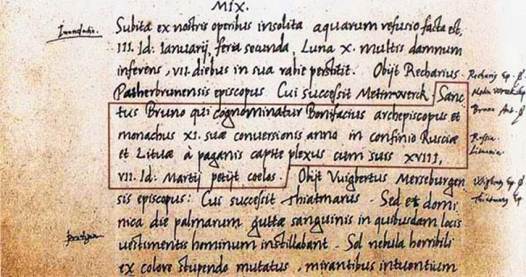
Written in the Annals of Quedlinburg: “[In 1009] St. Bruno, an archbishop and monk, who was called Boniface, was slain by Pagans during the 11th year of this conversion at the Rus and Litua border, and along with 18 of his followers, entered heaven on March 9th.”
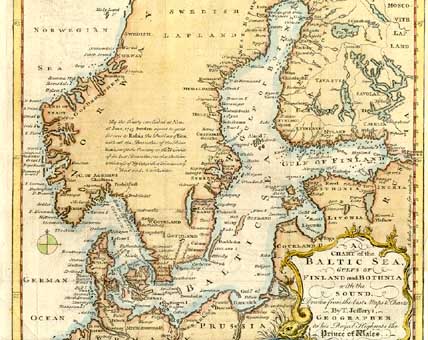
In the 11th century, chronicler Adam of Bremen used the Latin name Mare Balticum for the Baltic Sea.
The origin of the word “Baltic” remains debated.
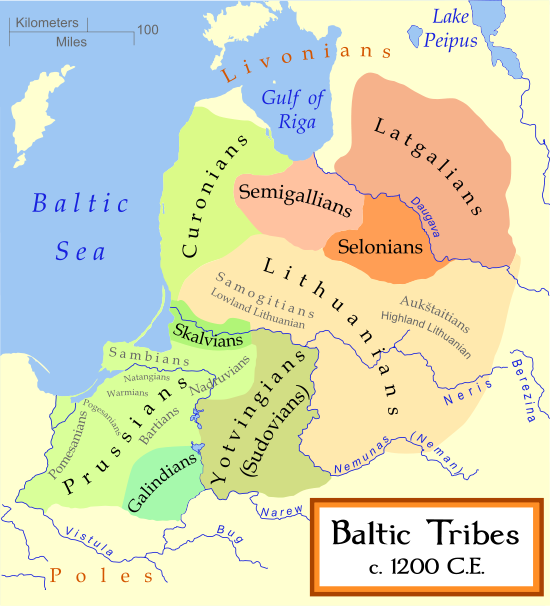
Various Baltic tribes ruled the Baltic Sea region: Latgalians, Samogitians, Aukštaičiai, Curonians, Prussians, Skalvians, Yotvingians, Galindians, Semigallians, and Selonians.
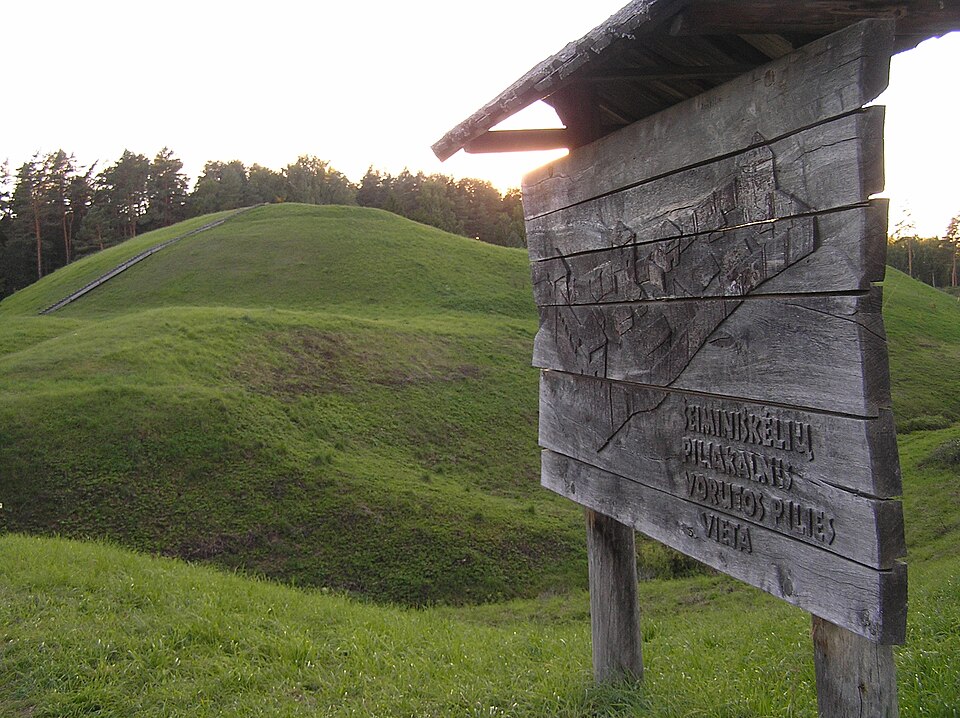
Voruta appears in a medieval written source as a castle associated with Mindaugas.
Its location remains unknown, and historians still debate whether it served as Mindaugas’s principal residence or political center.
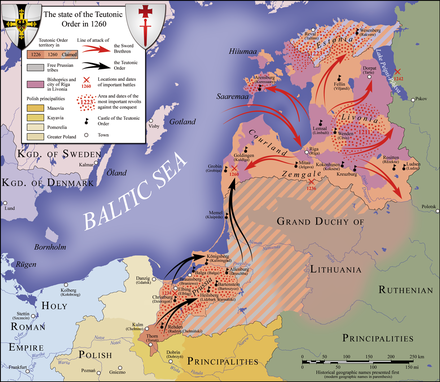
Beginning in the late 12th and early 13th centuries, Christian military orders and crusaders launched campaigns to conquer and convert the pagan peoples of the eastern Baltic.
The Livonian Brothers of the Sword were the first to become active in the region; the Teutonic Order later became Lithuania’s principal military adversary.
A peace treaty between Lithuanian dukes and the principality of Galicia–Volhynia named 21 Lithuanian dukes, including five senior rulers and Mindaugas.
The document provides important evidence of increasing political organization and consolidation among Lithuanian lands before the rise of Mindaugas.
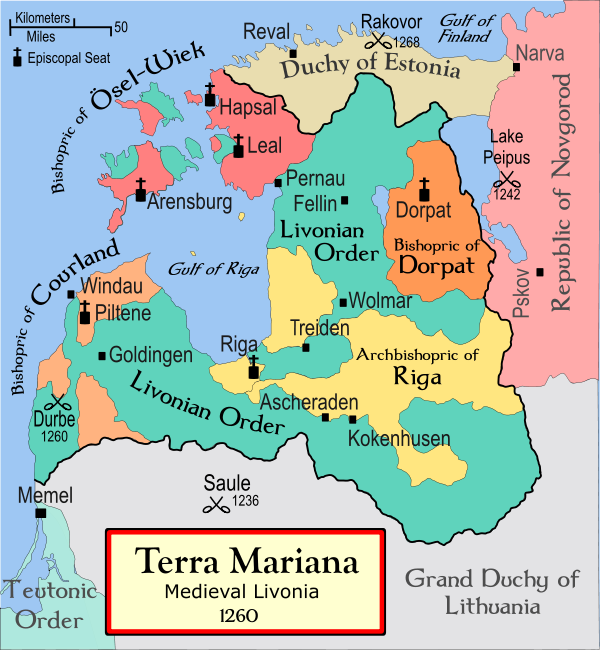
The Livonian Brothers of the Sword, founded in 1202 to conquer and Christianize the eastern Baltic, suffered a devastating defeat at the Battle of Saulė against Samogitian forces, traditionally associated with Duke Vykintas.
The defeat led to the surviving Livonian Brothers being incorporated into the Teutonic Order.
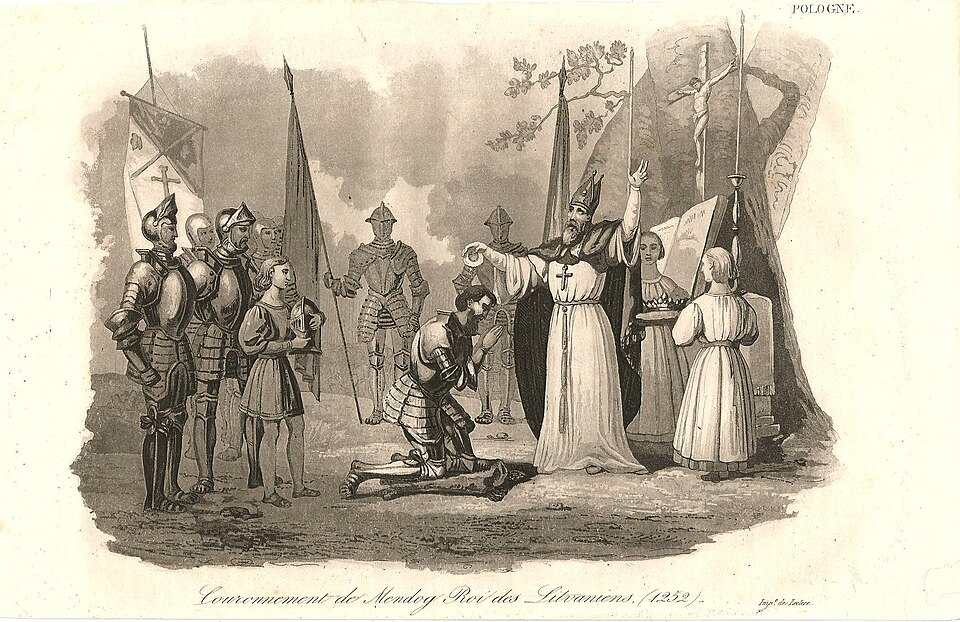
Mindaugas consolidated much of Lithuania under his authority and was crowned King of Lithuania on July 6, 1253, becoming Lithuania’s first and only crowned king.
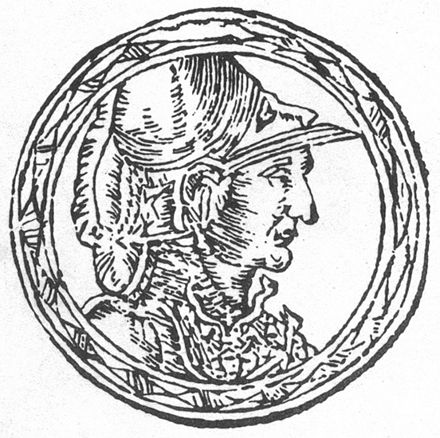
During Grand Duke Traidenis’ reign, which began in 1269, Lithuania expanded into Sudovia, Semigalia, and Black Ruthenia.
A devout pagan, Traidenis defeated many incursions by the Livonian Order.
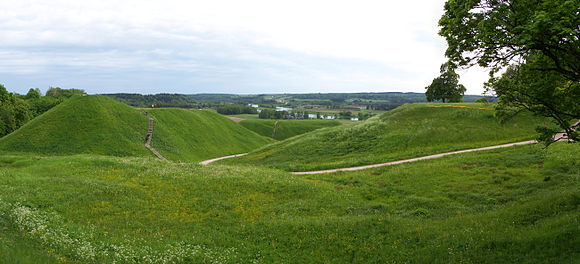
Kernavė developed into one of the most important political, economic, and defensive centers of the early Lithuanian state.
It is closely associated with the reign of Grand Duke Traidenis and early Lithuanian statehood.
The settlement was attacked and burned during the conflicts of 1390 and was not rebuilt in the same form.
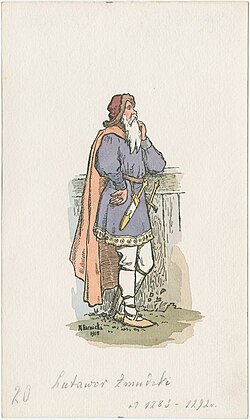
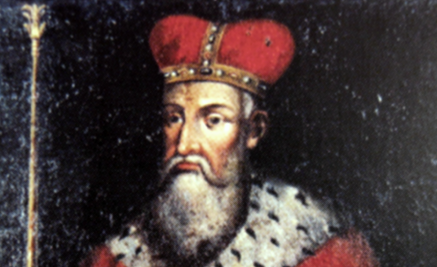
Vytenis’ reign was plagued by constant warfare with the Crusaders.
He secured Lithuania’s standing in the region with alliances with Riga and successful campaigns against the Livonian Order.
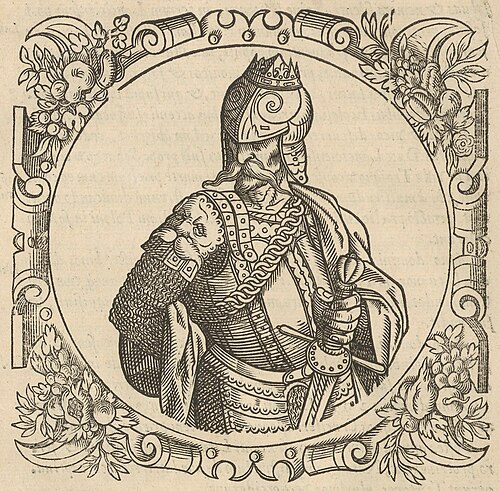
Gediminas strengthened the Lithuanian state, expanded its influence into Ruthenian lands, established diplomatic relationships across Europe, and founded the Gediminid dynasty, whose descendants would rule Lithuania and other European states.
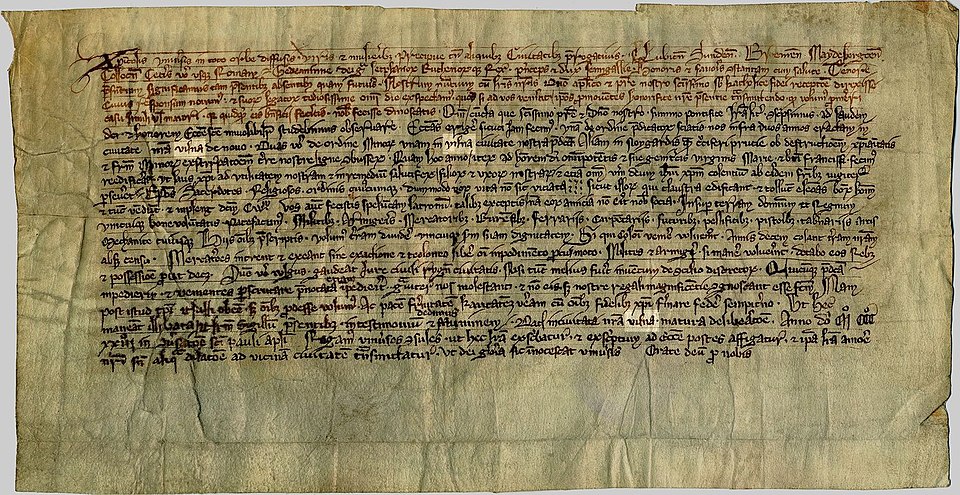
Gediminas referred to Vilnius as his capital in letters sent to Western European cities in 1323.
According to a later Lithuanian legend, Gediminas founded the city after dreaming of an iron wolf howling from a hill; the pagan priest Lizdeika interpreted the dream as a sign that the city’s fame would spread worldwide.
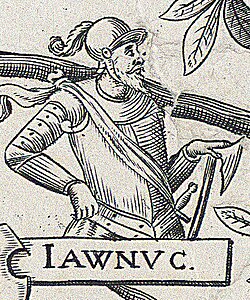
Jaunutis became Grand Duke of Lithuania after his father, Gediminas, died in 1341.
His brothers Algirdas and Kęstutis deposed him in 1345.
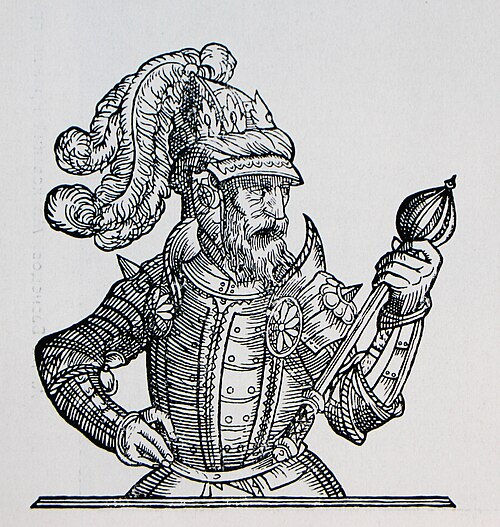
Gediminas’s sons, Algirdas and Kęstutis, deposed their brother, Grand Duke Jaunutis, in 1345 and effectively co-ruled the Grand Duchy.
Algirdas concentrated largely on eastern expansion and diplomacy, while Kęstutis defended Lithuania’s western frontier against the Teutonic Order.
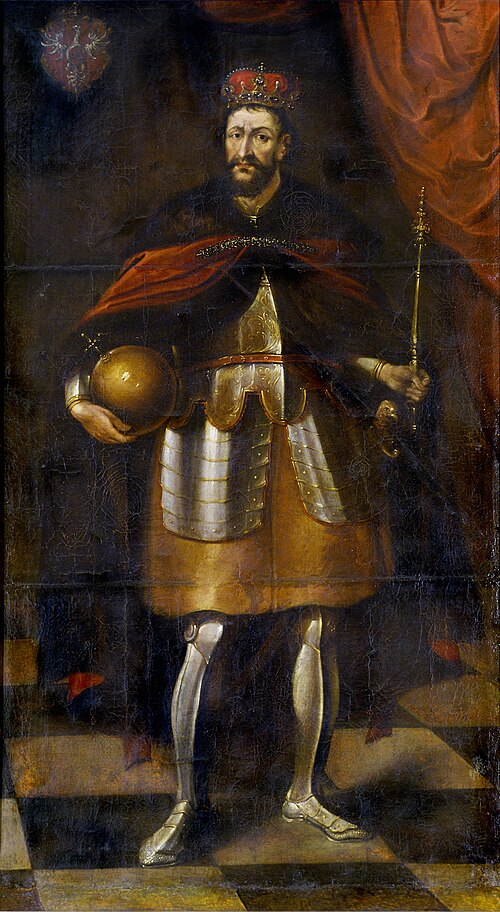
After his father, Grand Duke Algirdas, died, Jogaila became Grand Duke in 1377.
Jogaila was Lithuania’s last pagan ruler.
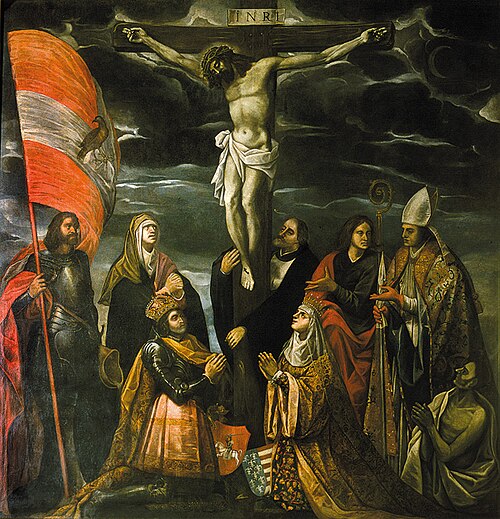
The Union of Krewo established the terms under which Grand Duke Jogaila would marry Jadwiga, ruler of Poland, convert to Christianity, and become King of Poland.
Jogaila was baptized as Władysław in 1386, married Jadwiga, and was crowned King of Poland.
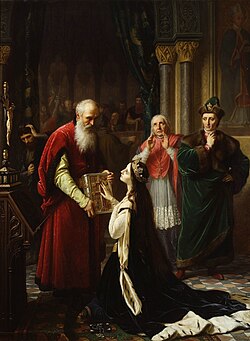
Eleven-year-old King Jadvyga (of the Capetian House of Anjou and the Piast dynasty) was married to Jogaila in the Union of Krewo.
Jadvyga died at the age of twenty-five soon after childbirth, as did her daughter. She was the last hereditary ruler of Poland.
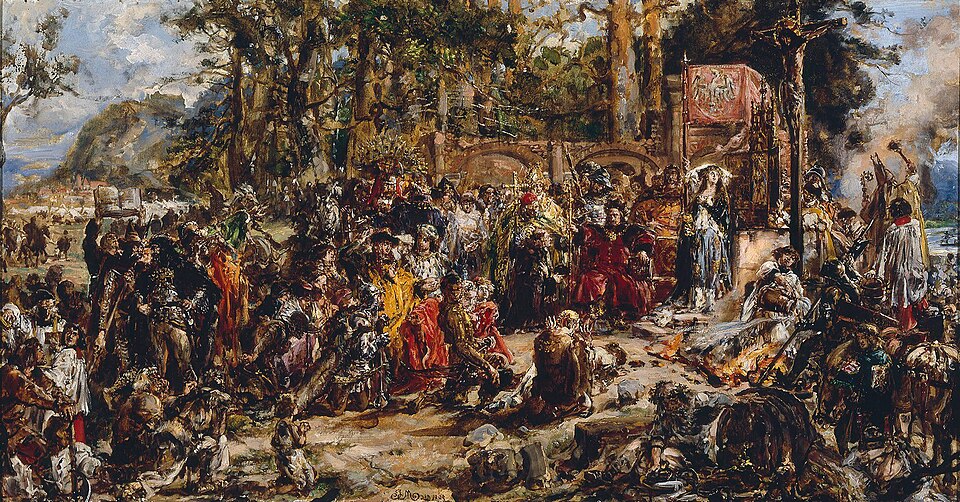
Jogaila’s marriage to Polish Queen Jadvyga signaled the official Christian conversion of Lithuania. Jogail began dismantling pagan sites of worship as nobles and their peasants were baptized.
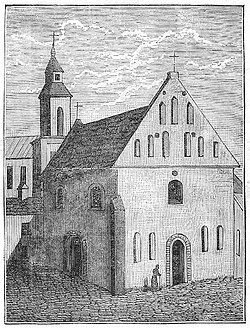
The Church of Saint Nicolos was first mentioned in writing in 1387, and predates the official Catholic conversion of pagan Lithuania.
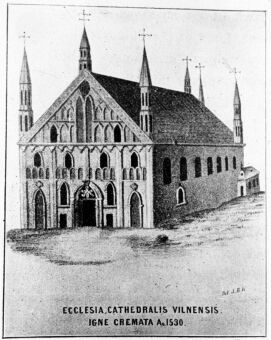
Jogaila built the Cathedral on the ancient pagan site of Perkūnas (thunder god). It’s possible that a wooden church built by Mindaugas after converting to Christianity stood on the site before. Jogaila’s church burned down in 1419. Vytautas re-built the church, part of it remains today.
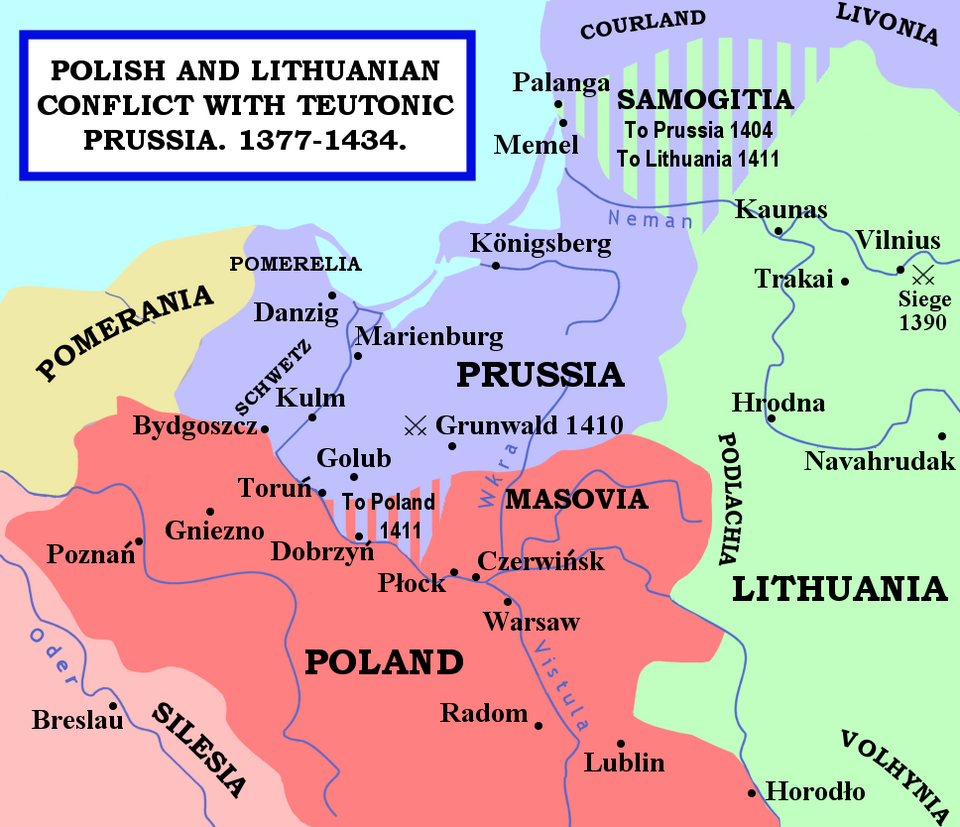
As Jogaila converted to Christianity, he made a secret treaty with the Teutonic Knights, which threatened the power of his uncles, Algirdas and Kestutits, and the lands they controlled (present-day Lithuania, Belarus, Ukraine, Transnistria, parts of Poland and Russia). Kestutis’ son, Vytautas, led the rebellion against Jogaila.
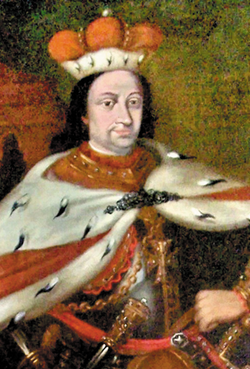
To end the civil war, Jogaila conceded to Vytautas, making him the Grand Duke and co-regent of Lithuania. Jogaila ensured Vytautas was his vassal, changing his title to Supreme Duke of Lithuania, with Vytautas agreeing that upon his death, his lands would go to the King of Poland.
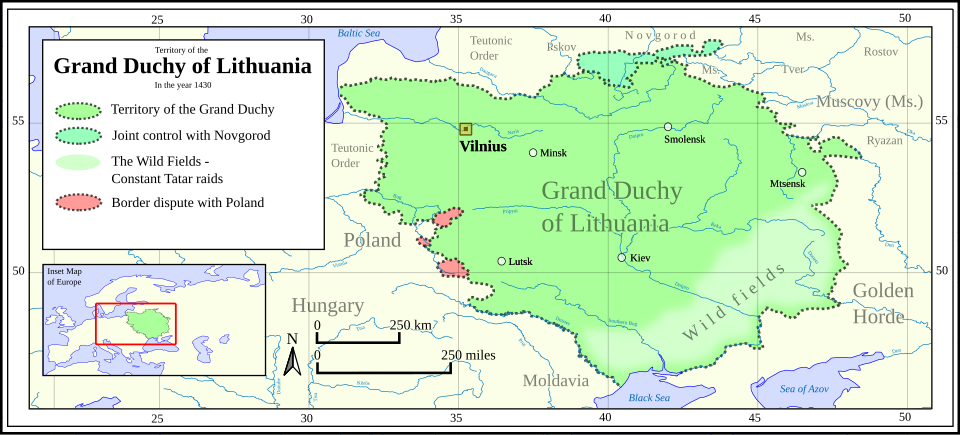
Vytautas mounted many campaigns to extend Lithuanian territory, which stretched from Pskov and Novogrod to the Black Sea.
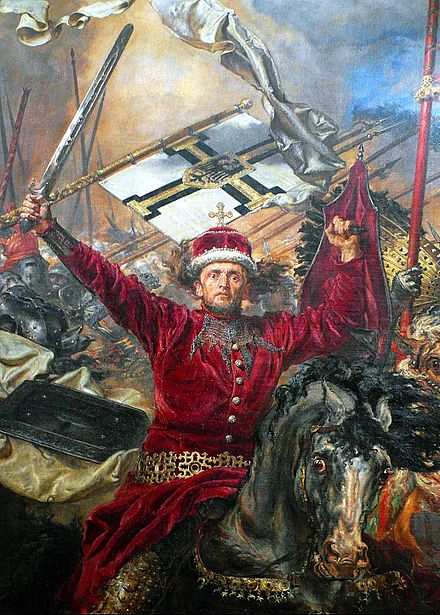
The Teutonic Knights suffered a major defeat from the united forces of Lithuanian Grand Duke Vytautas and the King of Poland Jogaila, shifting the balance of power from Western Europe to Eastern Europe.
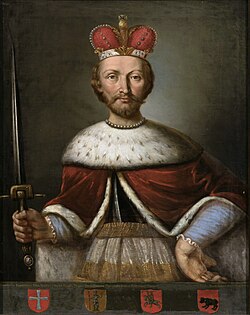
Sigismund became Grand Duke of Lithuania in 1432 after the death of his uncle, Vytautas.
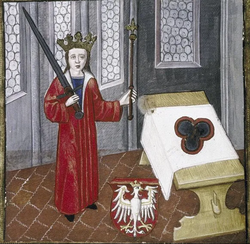
Ten-year-old Władysław III ascended the throne in 1434 after his father, Jogaila, died. He died at the age of twenty, going into the Battle of Varna.
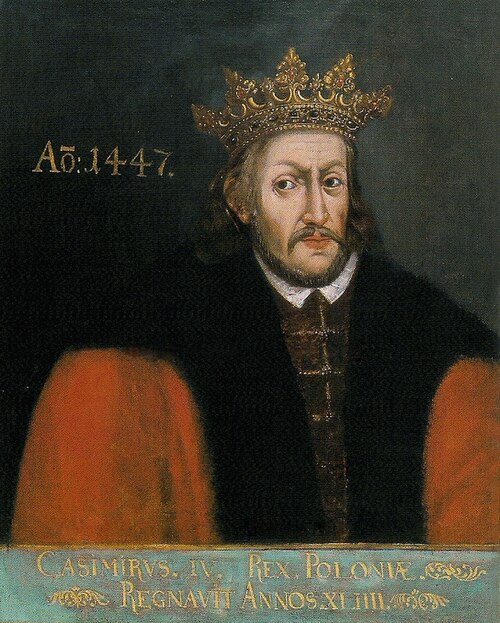
Upon the death of Sigismund Kestutits, Casimir IV (Jogaila’s 3rd son) became the Grand Duke of Lithuania in 1440. Despite initial objections from the Polish nobility, who argued that he was not of Polish royal blood, Casimir IV was elected King of Poland in 1447.
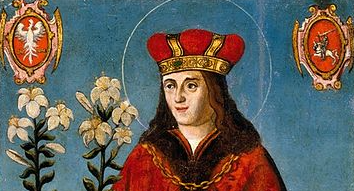
Casimir was heir apparent to the throne, but he was pious and devoted to God and turned to religious life. But he died from tuberculosis at the age of twenty-five, after which, several miracles were attributed to him. He was cannonized in 1501, and is the patron saint of Lithuania.
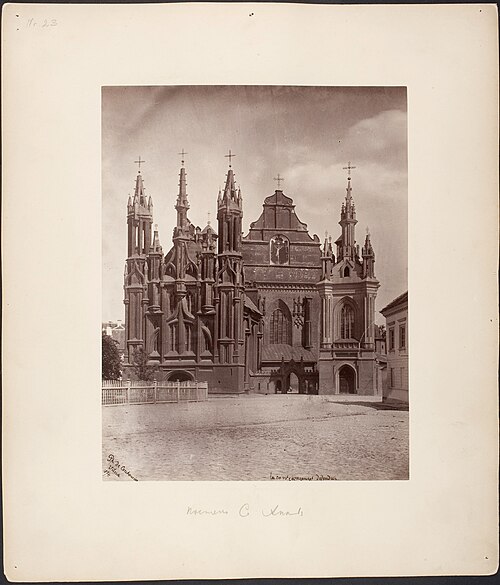
The first church at this site was constructed for Vytautas the Great’s wife, Anna, but was destroyed in a fire in 1419. King of Poland and Grand Duke of Lithuania, Alexander Jagiellon, began construction of the brick church in 1495.
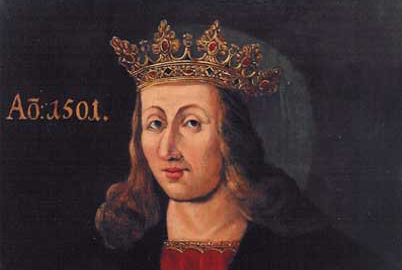
Alexander was made Grand Duke after the death of his father Casimir IV and elected King of Poland in 1501.
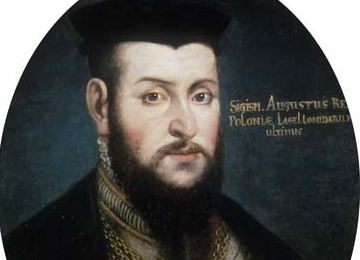
Nine-year-old Sigismund II was elected King and Grand Duke in 1529 while his father was still alive, and . Sigismund the Old co-regent until the younger ruler began his active reign in 1544.
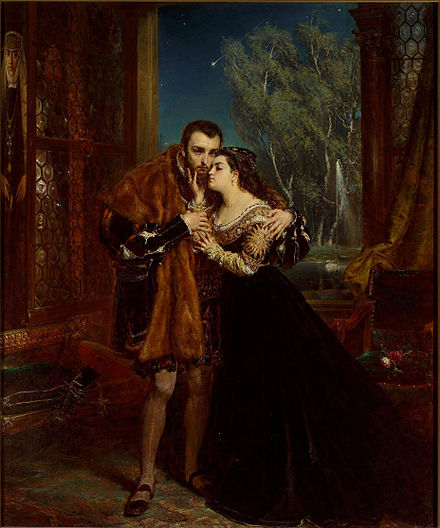
Considered the most beautifual woman in Europe, Barbora Radvilaitė secretly married King and Grand Duke Sigismud II Augustus., against the wishes of the Polish nobility. Their love story was a scandal for the times and her mother-in-law Bona Sforza was rumored to have poisoned her.
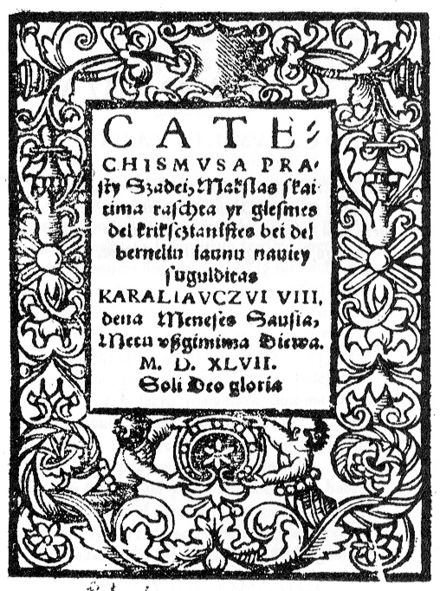
Martynas Mažvydas published ‘The Catechism’ in Königsberg. 200 copies were printed, and only two are known to have survived. One is displayed at Vilnius University and the other at the Nicolaus Copernicus University in Torun, Poland.
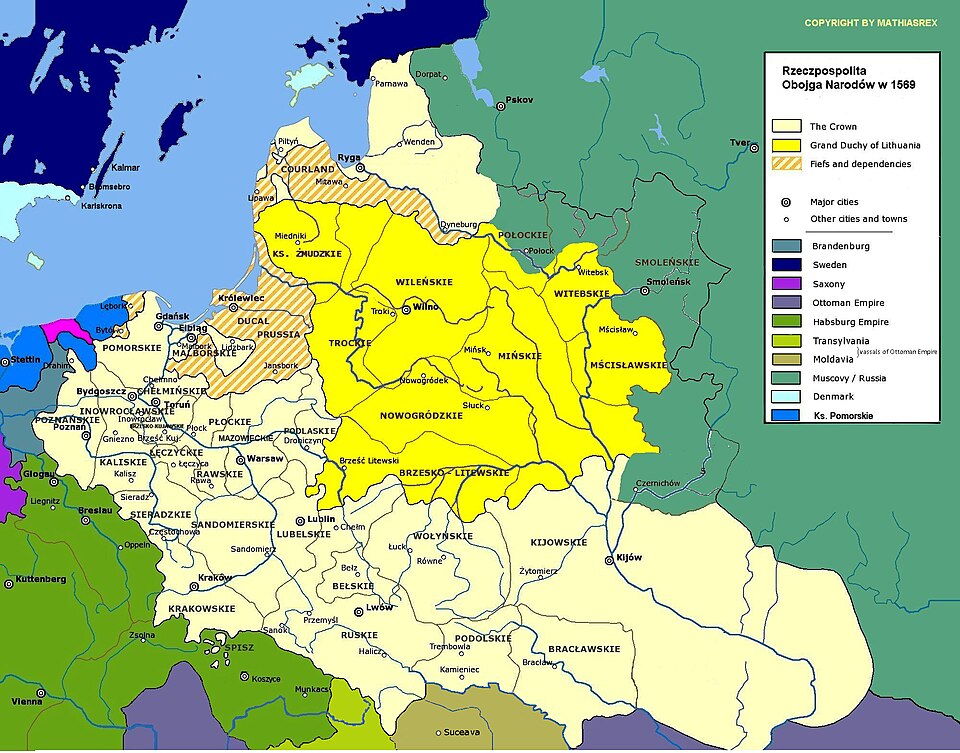
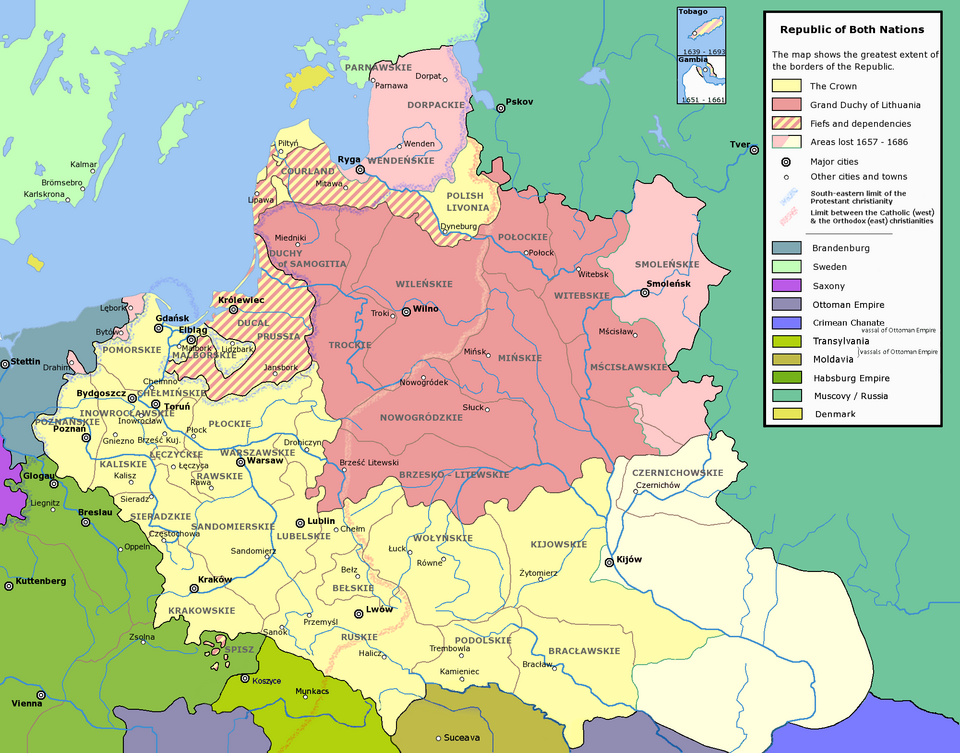
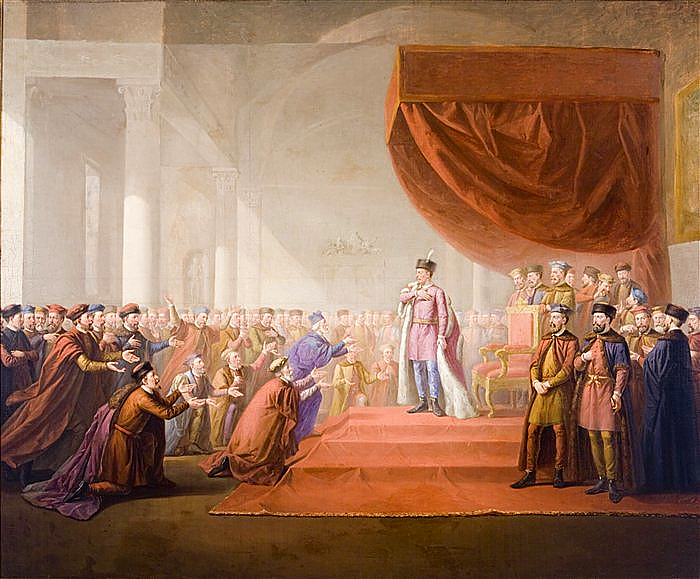
The Polish-Lithuanian Commonwealth, creating a single state, was ruled by a single elected monarch and governed by a common Senate and parliament.
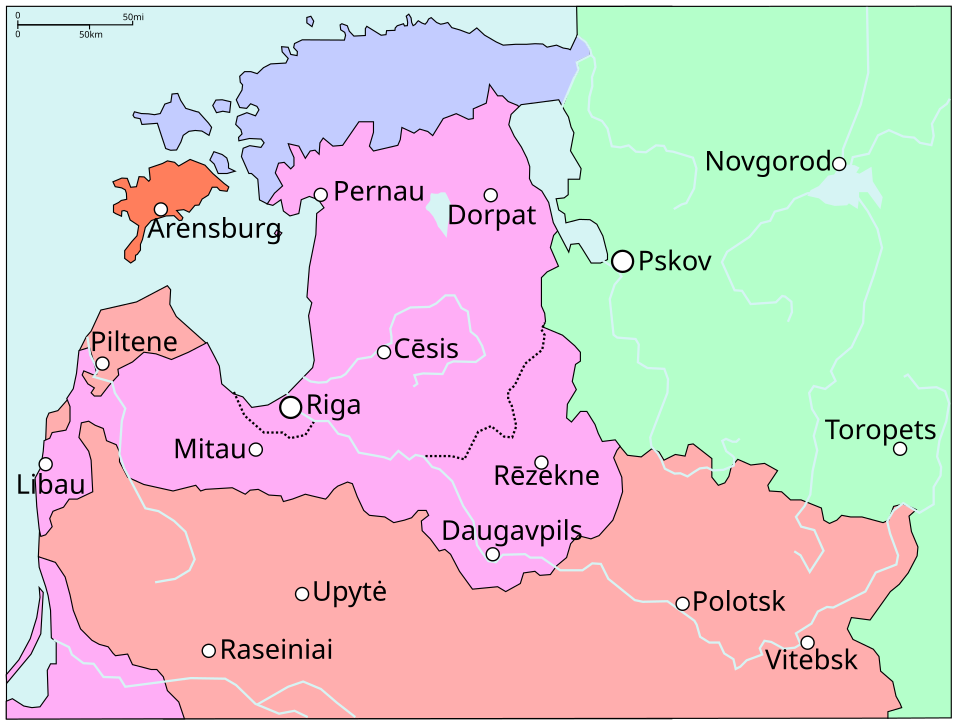
Livonia, also known as Terra Mariana (present-day Latvia and Estonia) was formed in the aftermath of the Livonian Crusade (1198-1290) and divided into theocratic feudal principalities. Russian Tsar Ivan IV invaded Livonia, then invaded Lithuania in 1563. Battles and raged for two deacdes In the end, the Swedish-Lithuanian-Polish alliance defeated the Tsar.
The university was formed when the Lithuanian nobility asked Jesuits to create an institute of higher learning in 1568. The Vilnius Academy was established. In 1579, Stefan Batory, King of Poland and Grand Duke of Lithuania, upgraded the academy, creating the “Alma Academia et Universitas Vilnensis Societatis Jesu.”
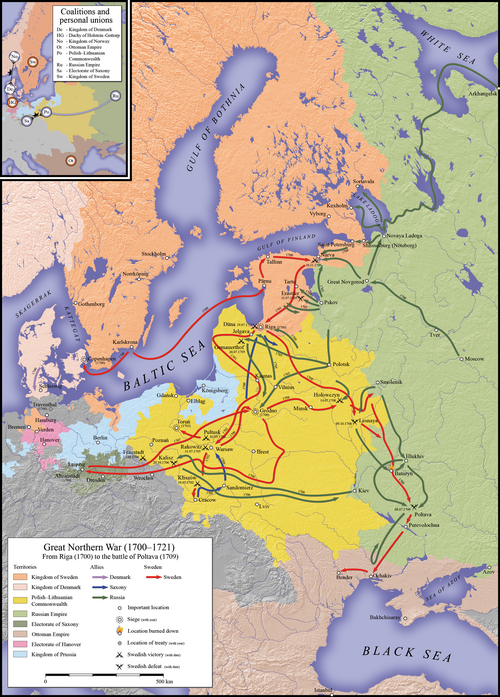
The War impacted the entire Baltic region as Norway, Denmark, and Saxony attacked Swedish territory in Old Livonia. The Swedes then invaded the Polish-Lithuanian Commonwealth. Russia then entered the war, which eventually pulled in Finland, Northern Germany, and Britain. The two-decade war devasted the Baltic region. War, plague, and famine took 40% of the Polish-Lithuanian population